
The Order of Preachers, commonly known as the Dominicans, is one of the most influential religious orders in the Catholic Church. For more than 800 years, the Dominican Order has been dedicated to preaching the Gospel, teaching the truth and helping others grow in faith.
Their mission is rooted in a simple conviction: truth matters, and it is meant to be shared.
The Founding of the Dominican Order
When was the Dominican Order founded? The Dominican Order of Preachers was founded in the early 13th century by St. Dominic de Guzmán, a Spanish priest who saw a growing need for clear and faithful preaching. Religious orders like the Dominicans are communities within the Catholic Church whose members dedicate their lives to prayer, service and a particular mission.
Where was the Dominican Order founded? St. Dominic began gathering his first companions in southern France, in the region of Languedoc, where confusion about Christian teaching had taken deep root. He recognized that responding to this challenge required more than correction — it required formation.
Why did St. Dominic start the Dominican Order? He saw people genuinely searching for truth but not always encountering it clearly. His answer was to form men committed to a life of prayer, study and preaching who could meet that need directly. In 1216, the Order was formally approved by the Catholic Church as the Dominican Order, also known as the Order of Preachers.
A Mission Rooted in Preaching
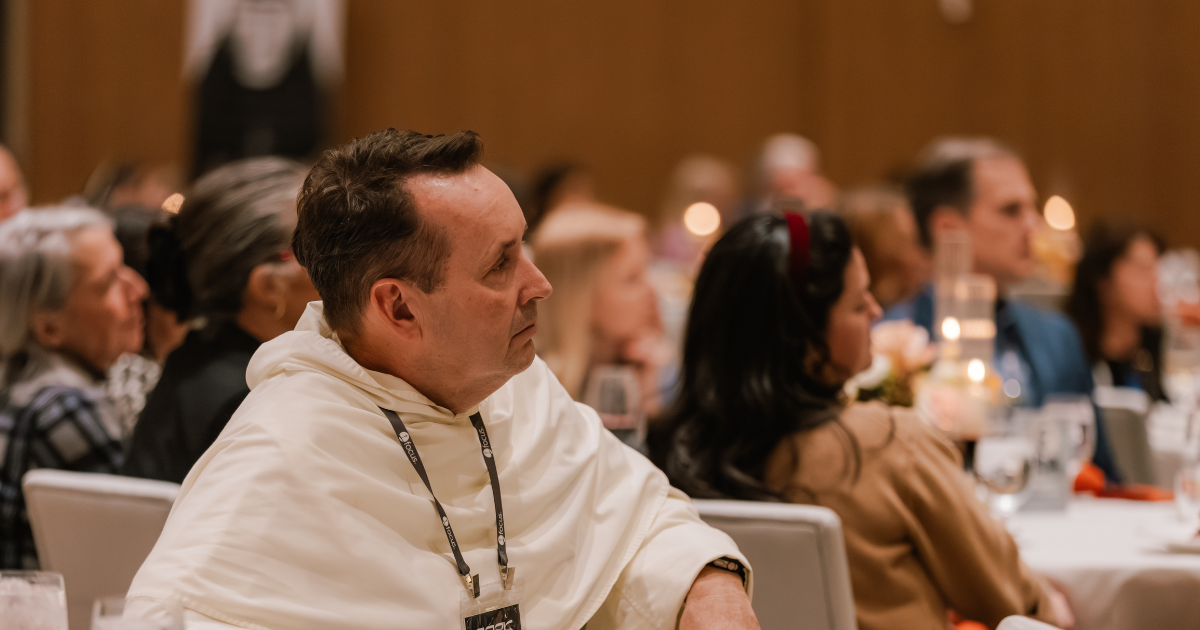
From the beginning, the Dominican Order of Preachers was distinct in its focus on preaching. Their goal was not only to live the faith personally, but to proclaim it clearly to others.
This preaching was grounded in Scripture, shaped by study and directed toward helping others understand and respond to the truth of the Gospel. It sought to engage both the mind and the heart.
The Dominican Order motto — Veritas, the Latin word for truth — captures this mission perfectly. Everything the Dominicans do flows from a commitment to seeking, living and sharing the truth.
Study and the Search for Truth
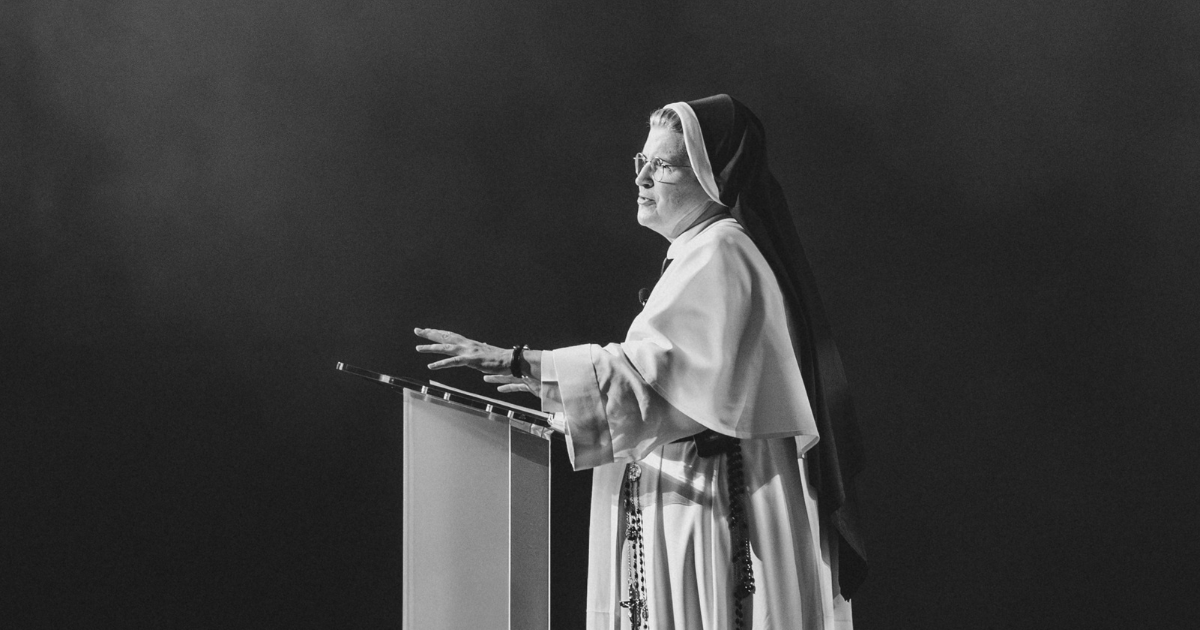
A defining feature of the Dominican Order is its emphasis on study.
Dominic believed that effective preaching required a deep understanding of the faith. Over time, Dominicans became known for their intellectual tradition, contributing significantly to theology, philosophy and education.
One of the most well-known Dominicans is St. Thomas Aquinas, whose work continues to shape Catholic theology today. His writings demonstrate that faith and reason are not opposed, but work together in the search for truth — a conviction that lies at the heart of the Dominican Order’s identity.
Dominican Order Symbols
The Dominican Order has several distinctive symbols that reflect its identity and mission.
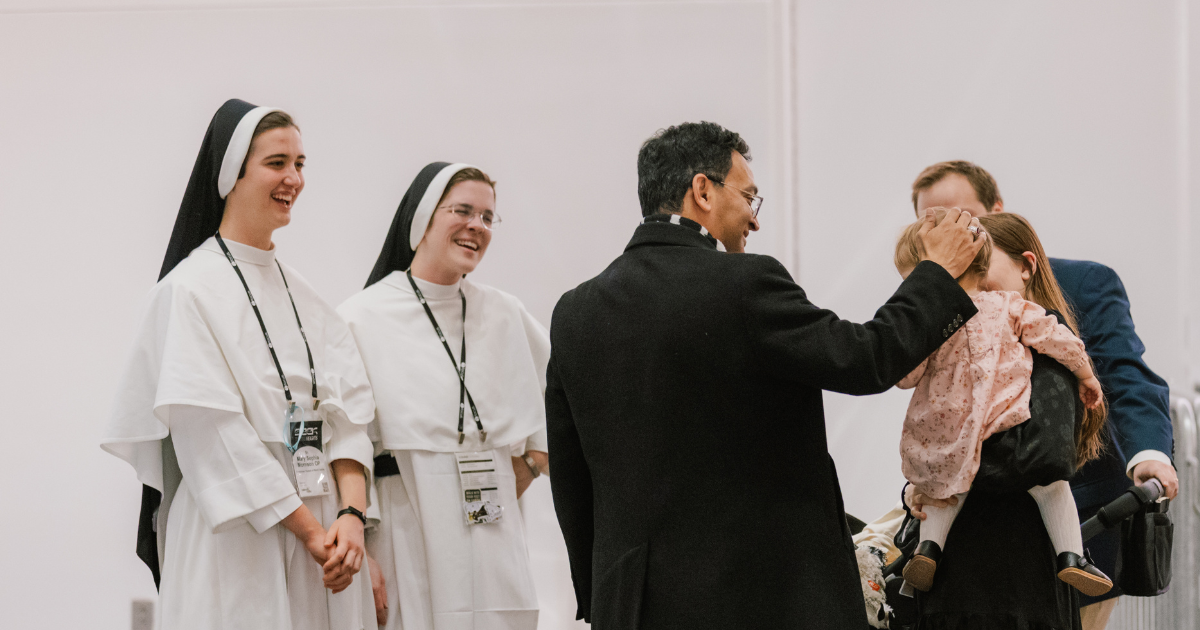
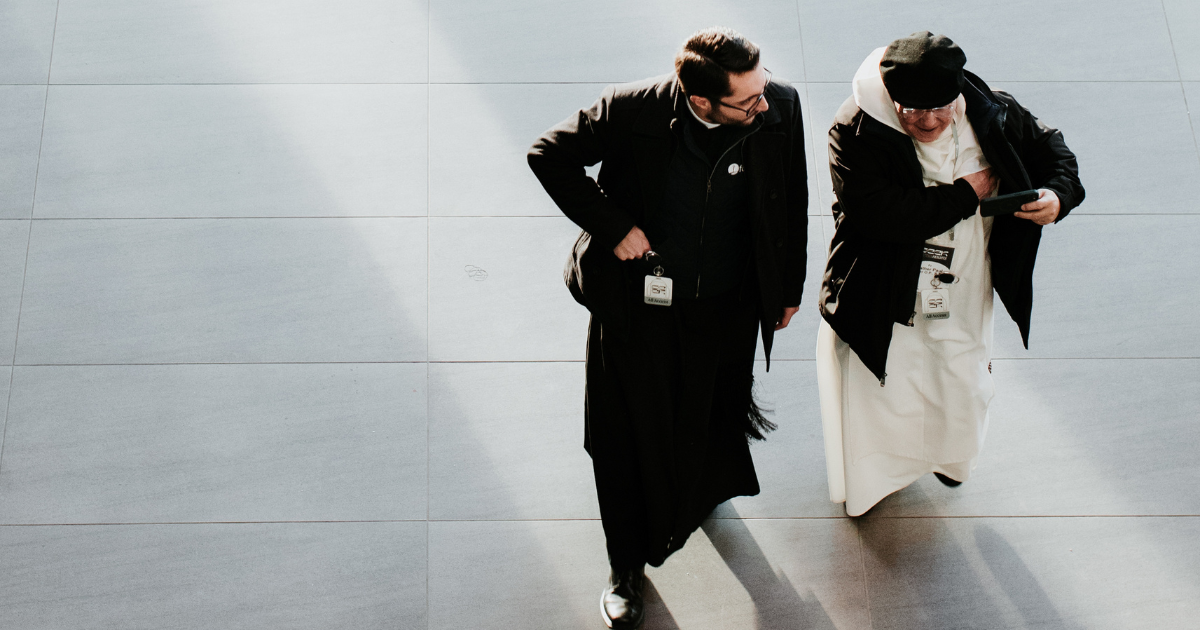
The black and white habit is the most recognizable — white representing purity and the light of truth, black representing penance and humility. The Dominican Order of nuns and the Third Order also wear versions of this habit, with the Third Order Dominican habit adapted for life outside the monastery while still reflecting the Order’s identity.
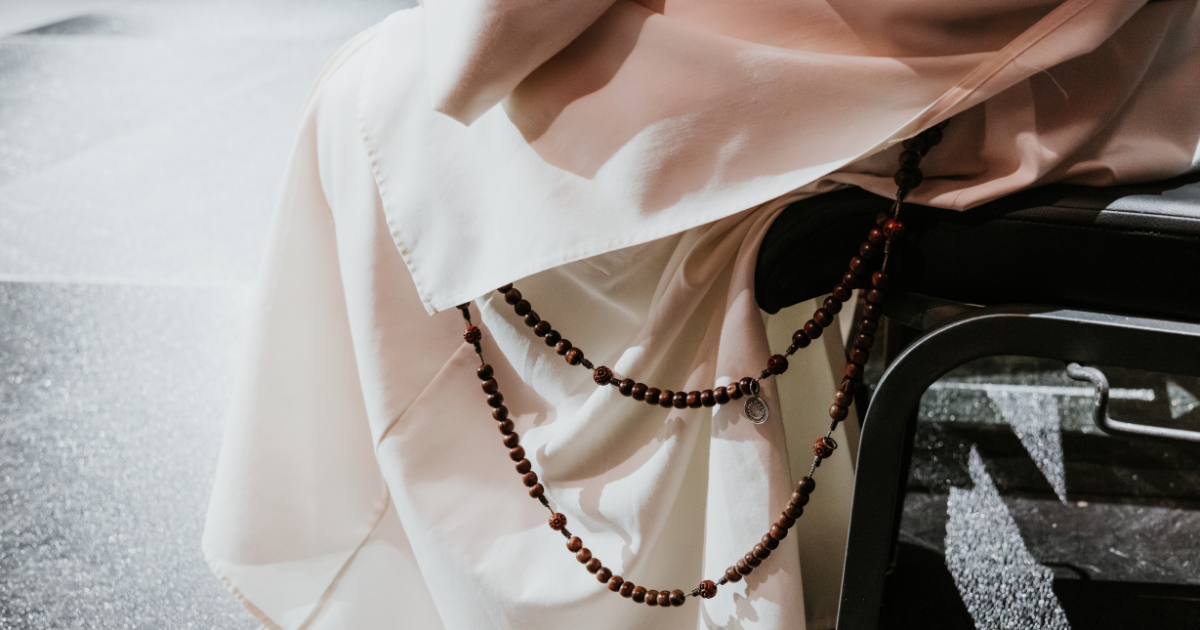
Other symbols associated with the Dominican Order include the Rosary, which St. Dominic is traditionally credited with popularizing, and the dog carrying a torch — a visual pun on the Latin Domini canes, meaning “hounds of the Lord” — representing the Dominicans’ mission to carry the light of truth into the world.
The Dominican Way of Life
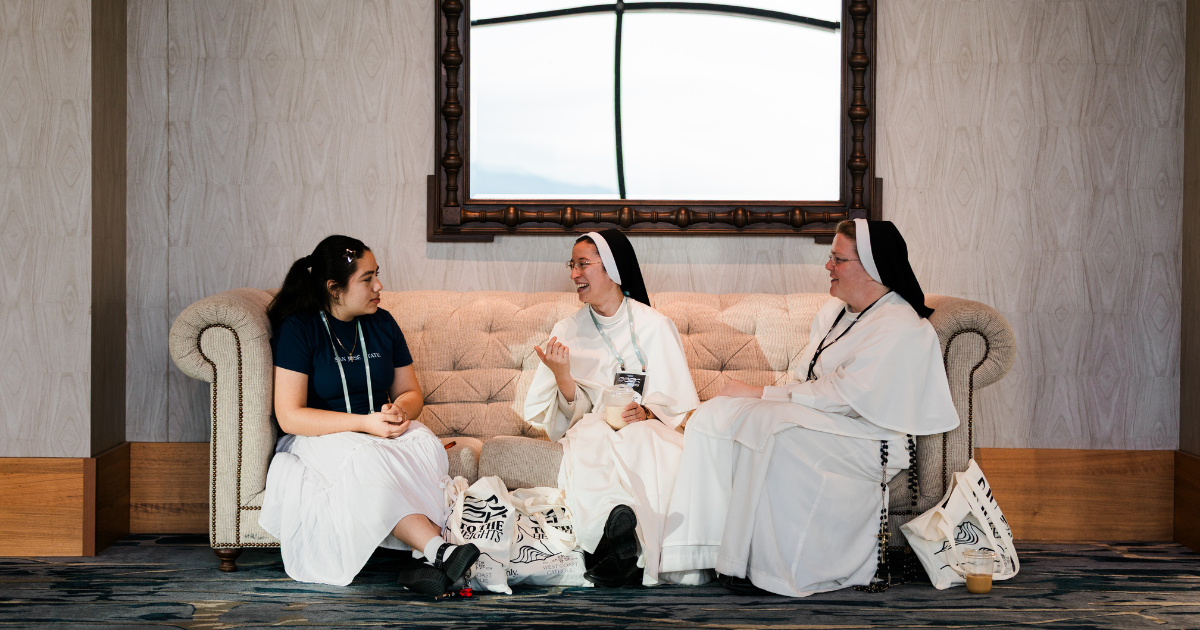
The life of a Dominican is often described through four key pillars: prayer, study, community and preaching. These are not separate activities, but a unified way of life. Study informs preaching, prayer sustains it and community supports it.
Dominicans take vows of poverty, chastity and obedience, dedicating their lives to God and to the service of others.
The Dominicans Today
Today, the Dominican Order continues its mission around the world. Dominicans serve as priests, brothers, sisters and lay members, working in parishes, universities, schools and missions.
At the heart of the Dominican family are its contemplative nuns, who live in cloistered monasteries dedicated to prayer, study and intercession. While they do not preach publicly, their life of silence and sacrifice is considered integral to the Order’s mission — a reminder that the search for truth is not only an intellectual pursuit, but a deeply prayerful one.
While the cultural context has changed since the 13th century, the need for clear and faithful witness remains. Questions about truth, meaning and the human person continue to shape the modern world, and the Dominican mission responds to those questions.
The history of the Dominican Order is not only about the past. It reflects an ongoing mission within the Catholic Church.
Their example shows that truth can be known, that faith and reason work together and that the Gospel is meant to be shared. The Dominican tradition reminds us that understanding the faith is not only for personal growth, but a way of serving others.
FAQ: The Dominican Order
Q: What is the Dominican Order?
A: The Dominican Order — officially known as the Order of Preachers — is a religious order within the Catholic Church founded in 1216 and dedicated to preaching, teaching and the pursuit of truth. It is one of the most intellectually influential orders in the history of the Church.
Q: When was the Dominican Order founded?
A: The Dominican Order was formally approved by Pope Honorius III in 1216, making it over 800 years old. St. Dominic had begun gathering his first companions several years earlier, around 1215, in southern France.
Q: Where was the Dominican Order founded?
A: The Dominican Order has its roots in Languedoc, in southern France, where St. Dominic first began his preaching mission. The Order was formally approved in Rome in 1216.
Q: Why did St. Dominic start the Dominican Order?
A: St. Dominic founded the Order in response to widespread confusion about Christian teaching in parts of Europe. He saw that people were searching for truth but not always encountering it clearly, and recognized that the answer was not simply correction — but formation, preaching and a life visibly rooted in the Gospel.
Q: What is the Dominican Order motto?
A: The Dominican Order motto is Veritas — Latin for “truth.” It reflects the Order’s core commitment to seeking, living and proclaiming the truth of the Gospel in every age.
Q: What are the Dominican Order symbols?
A: The most recognizable symbol of the Dominican Order is its black and white habit. Other symbols include the Rosary, traditionally associated with St. Dominic, and the image of a dog carrying a torch — a visual reference to the Latin Domini canes, or “hounds of the Lord,” representing the Dominicans’ mission to carry the light of truth into the world.
Q: What is the Third Order Dominican habit?
A: The Third Order Dominican habit is a simplified version of the full black and white habit worn by Dominican friars and nuns, adapted for laypeople living out the Dominican charism in ordinary life. It is typically worn at Dominican gatherings and events as a sign of membership in the broader Dominican family.
Q: What is the Dominican Order of nuns?
A: The Dominican Order of nuns refers to the contemplative women’s branch of the Dominican family. Dominican nuns live a cloistered life of prayer, study and intercession, serving as the contemplative heart of the Order’s mission. They are distinct from Dominican sisters, who live active apostolic lives in ministry and education.
Q: What is the Dominican Order of Preachers?
A: The Order of Preachers is the official name of the Dominican Order, reflecting its founding mission of preaching the Gospel through faithful, well-formed proclamation. The name was given by Pope Honorius III when he formally approved the Order in 1216.
Q: Is there an Anglican Order of Preachers (Dominicans)?
A: Yes. There is an Anglican religious community known as the Society of Saint Francis and related communities, but specifically an Anglican Order of Preachers — inspired by the Dominican charism — also exists within the Anglican Communion. It draws on the same emphasis on preaching, study and community that defines the Catholic Dominican tradition, while operating within an Anglican context.
Q: Who is the most famous Dominican?
A: St. Thomas Aquinas is arguably the most well-known Dominican. His theological and philosophical writings — particularly the Summa Theologica — remain foundational to Catholic thought and continue to be studied and taught around the world.
Q: Are there lay Dominicans?
A: Yes. The Dominican family includes a Third Order, also known as the Lay Fraternities of St. Dominic, which allows laypeople to live out the Dominican charism in the context of ordinary life — through prayer, study and a commitment to sharing the faith in their families, workplaces and communities.
Q: What are the four pillars of Dominican life?
A: The four pillars of Dominican life are prayer, study, community and preaching. Rather than separate activities, these form a unified way of life in which each element supports and informs the others.
Q: How are the Dominicans different from other religious orders?
A: While many religious orders emphasize monastic life or charitable works, the Dominicans were founded specifically around the mission of preaching and teaching. Their distinctive emphasis on study as a form of apostolic service sets them apart — learning not for its own sake, but in order to share the truth with others.
Additional Resources
Loving this series? Check out our other series:
Meet the Saints: Saint Joan of Arc
Meet the Saints: St. Ignatius of Loyola
How To Pray: A Step-by-Step Guide to Praying the Rosary
How to Pray: Simple Catholic Morning and Night Prayers
 Give
Give
