
If you’ve ever done something you deeply regret — something that hurt people, something you can’t undo — and wondered whether God could still use you anyway, Saint Paul is your saint.
He started out as the enemy of the Church. He watched Christians die. He practically held the coats of the men who stoned the first martyr. And then God knocked him off a horse on a road to Damascus, and everything changed.
Paul’s story is not primarily about the man he was. It’s about what happens when God refuses to give up on someone — and what that person does with the second chance.
Quick Biography: Saint Paul
St. Paul (c. 5–67 AD) was born Saul of Tarsus in what is now modern-day Turkey. A Roman citizen by birth, he was also a devout Jew raised in the tradition of the Pharisees — educated in Jerusalem under the great rabbi Gamaliel, and deeply trained in the Law of Moses. By his own account, he was zealous. By any measure, he was brilliant.
He first appears in Christian history as a young man present at the stoning of St. Stephen, the Church’s first martyr. From there, he became an active persecutor of the early Christian community — traveling to Damascus with the explicit goal of arresting followers of the Way and bringing them back to Jerusalem in chains.
He never made it to Damascus.
On the road, he was struck down by a blinding light and heard a voice say: “Saul, Saul, why do you persecute me?” The voice identified itself as Jesus — the same Jesus whose followers Saul had been hunting. He arrived in Damascus blind, fasted for three days, and was baptized by a disciple named Ananias, who had every reason to be afraid of him and went anyway.
What followed is one of the most extraordinary reversals in the history of the world. The man who had been destroying the Church became its most tireless missionary. Paul traveled throughout the Roman Empire — across what is now Turkey, Greece, and eventually Rome itself — planting churches, writing letters, and preaching the Gospel to anyone who would listen. He was beaten, shipwrecked, imprisoned, and stoned. He kept going.
His letters — Romans, Corinthians, Galatians, Ephesians, and the others — became a significant portion of the New Testament and remain the foundation of Christian theology to this day.
He was beheaded in Rome around 67 AD, under the Emperor Nero. He is venerated alongside St. Peter as one of the two great pillars of the Church.
Feast Day: June 29 (shared with St. Peter)
Patronage: Missionaries, theologians, writers, tentmakers, Gentile Christians
Symbols: Sword (the instrument of his martyrdom), book or scroll (representing his letters), serpent (referencing his survival of a snakebite on Malta)
Legacy: Author of much of the New Testament; founder of Christian communities across the Roman world; the theologian who articulated the doctrine of grace more clearly than anyone before or since
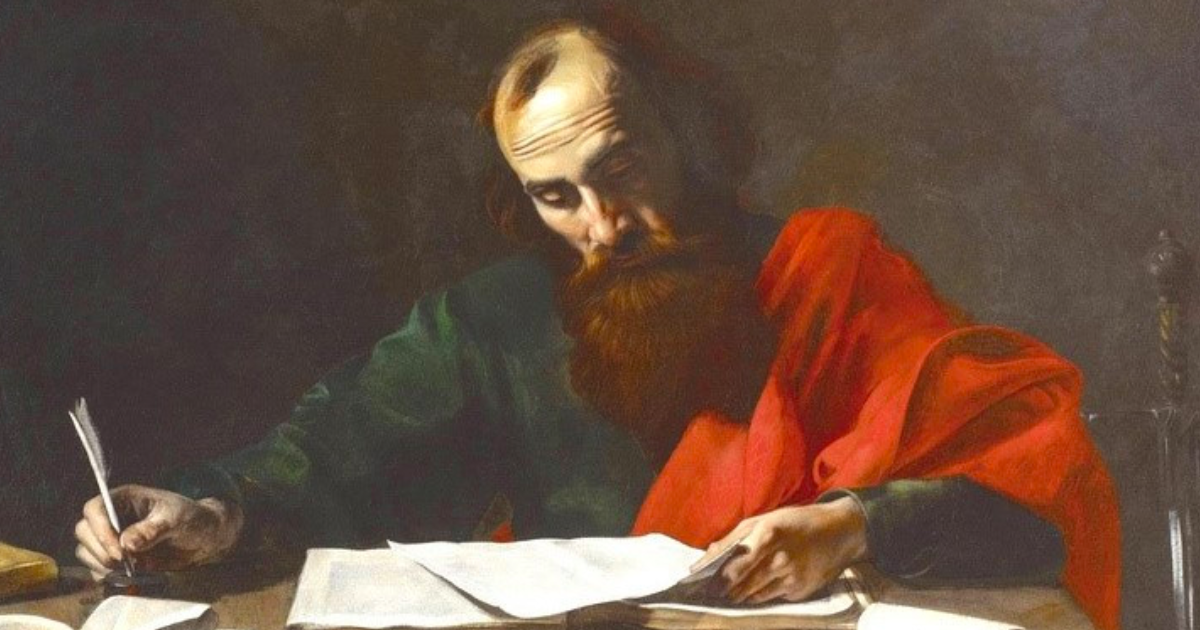
Who Was Saint Paul?
Paul never met Jesus during his earthly ministry. This is easy to overlook, but it matters enormously. Every other apostle had walked with Jesus, eaten with him, heard him teach. Paul had not. His encounter came later, on a road, in a flash of light — and yet he would come to understand the risen Christ as deeply as anyone in the early Church.
He never claimed this made him lesser. He claimed it made the grace more obvious.
Before his conversion, Paul was by every measure a success. He was educated, respected, and passionate about his faith. His persecution of Christians was not casual or careless — it was a sincere expression of his convictions. He believed the followers of Jesus were a danger to everything he held sacred, and he acted accordingly.
Then the encounter on the Damascus road changed everything. Paul didn’t just change his mind. He changed sides, completely and at enormous personal cost. The same communities he had been welcomed by as an ally now saw him as a traitor. The Christians he sought out were understandably terrified of him. He spent years on the margins — first in Damascus, then in Arabia, then back in his hometown of Tarsus — before Barnabas finally brought him into the main circle of the early Church and his missionary work began in earnest.
What stands out about Paul is not that he was perfect — he wasn’t. He describes his own inner struggle with remarkable honesty in his letters. He writes about doing the things he doesn’t want to do and failing to do the things he does want to do. He calls himself the greatest of sinners. He never seems to have fully gotten over what he had done before his conversion. And yet he also never let it paralyze him, because he was absolutely clear about one thing: the grace that had found him on that road was not something he had earned or deserved.
That is, for Paul, the whole point.
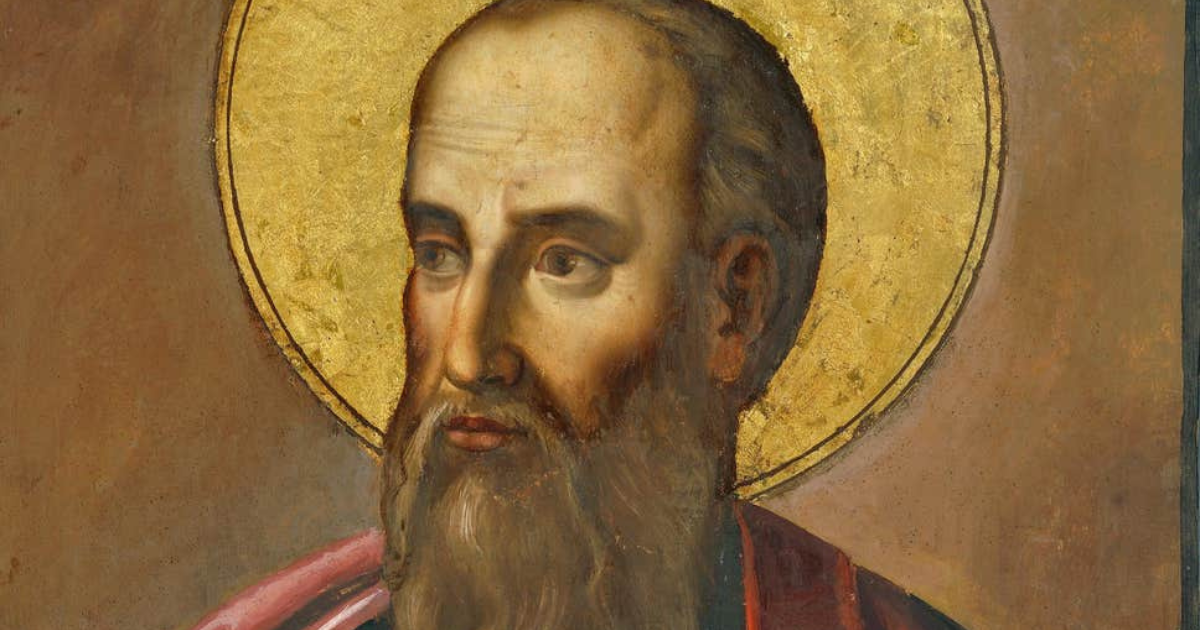
The Missionary Who Wouldn’t Stop
The scope of Paul’s missionary work is staggering.
In three major journeys — plus his eventual voyage to Rome — Paul traveled thousands of miles across the ancient world, almost entirely on foot or by sea. He preached in synagogues, in homes, in marketplaces, on the steps of the Areopagus in Athens. He started churches in Philippi, Thessalonica, Corinth, Ephesus, and dozens of other cities. He went back to visit them. He wrote to them when he couldn’t visit. He sent his companions when he himself was imprisoned.
He was imprisoned a lot. Paul’s letters frequently reference chains, beatings, and time in jail. In Second Corinthians, he gives a partial account of his sufferings that reads more like an inventory than a complaint: flogged five times with thirty-nine lashes, beaten with rods three times, stoned once, shipwrecked three times, in danger from rivers, bandits, fellow Jews, Gentiles, false brothers. In hunger and thirst. Cold and exposed.
He calls these things “light and momentary troubles.” He means it.
The thing that kept Paul going was not optimism. It was a settled conviction about what he had seen. He had encountered the risen Christ. Everything else — the hardships, the controversies, the constant opposition — was secondary to that fact. His letters carry a kind of urgency that is hard to explain except on his own terms: he genuinely believed that the message he had been given was the most important thing in the world, and that time was short.
He had towns to reach. He kept moving.
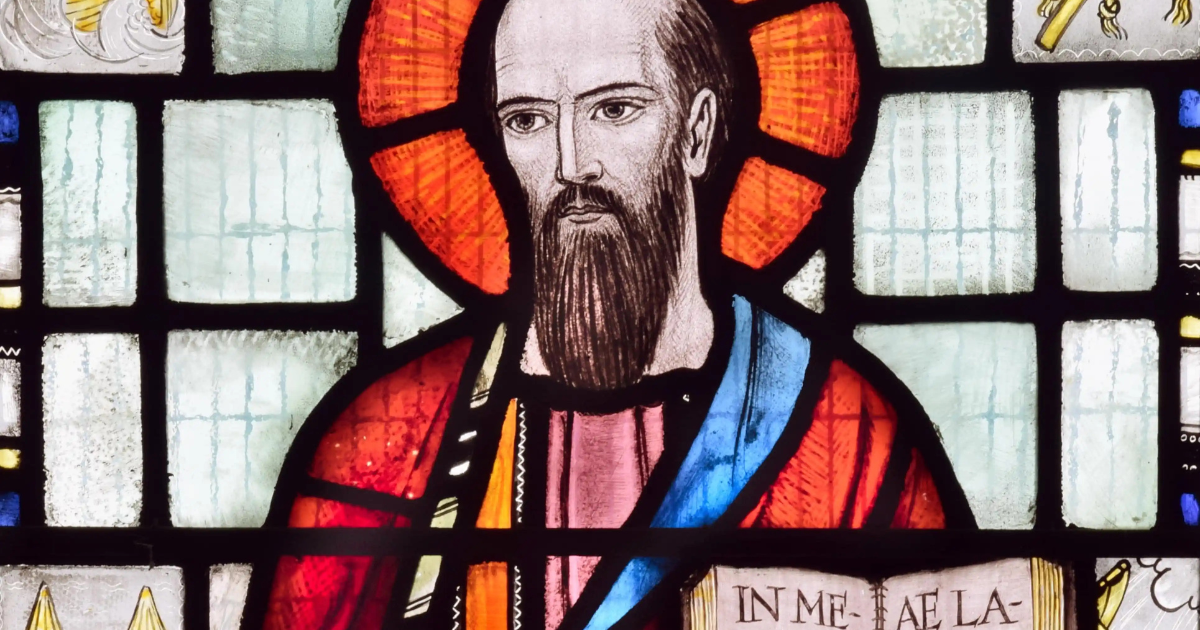
Saint Paul’s Letters
Paul’s letters are not systematic theology textbooks, though theologians have spent centuries mining them. They are responses — often urgent, sometimes sharp — to the specific problems of specific communities in specific places. Corinth is dealing with divisions and immorality. Galatia has been confused by teachers insisting on circumcision. Rome gets a longer, more structured treatment because Paul hasn’t been there yet and wants to introduce himself carefully.
Within these responses, Paul works out some of the most profound thinking in the history of Christianity.
On grace: We are not saved by what we do. We are saved by what Christ has done, received through faith. This is not permission to behave badly — Paul addresses that immediately — but it means that the starting point of the Christian life is gift, not achievement.
On identity: In Christ, there is no longer Jew nor Greek, slave nor free, male nor female. Paul is not collapsing real distinctions, but he is insisting that the deepest identity of a Christian is not their social category. It is their belonging to Christ.
On love: First Corinthians 13 — the “love chapter” read at nearly every wedding — was not written about romance. It was written to a community tearing itself apart over spiritual gifts and status. Paul’s point is that all the charisms in the world, exercised without love, amount to nothing.
On suffering: Paul does not promise that faith will make life easier. He promises that suffering, united to Christ, is not meaningless. He says he has learned the secret of contentment in every circumstance — and he learned it in circumstances most of us will never face.
His letters endure because they are not abstract. They are written by someone who has been tested at every point he describes, and who is still writing.
Paul Quotes
A few of his most memorable lines, drawn from his letters:
“I can do all things through Christ who strengthens me.” (Philippians 4:13)
“For I am convinced that neither death nor life, neither angels nor demons, neither the present nor the future, nor any powers, neither height nor depth, nor anything else in all creation, will be able to separate us from the love of God that is in Christ Jesus our Lord.” (Romans 8:38–39)
“My grace is sufficient for you, for my power is made perfect in weakness.” — the Lord’s reply to Paul’s prayer for relief, which Paul then applies to his own life: “Therefore I will boast all the more gladly about my weaknesses, so that Christ’s power may rest on me.” (2 Corinthians 12:9)
“I have learned, in whatever state I am, to be content.” (Philippians 4:11)
These are not the words of someone who had an easy life and found faith comforting. They are hard-won. Paul writes about contentment from a prison cell. He writes about hope while being hunted. The reason his words have endured for two thousand years is that they were not theoretical.
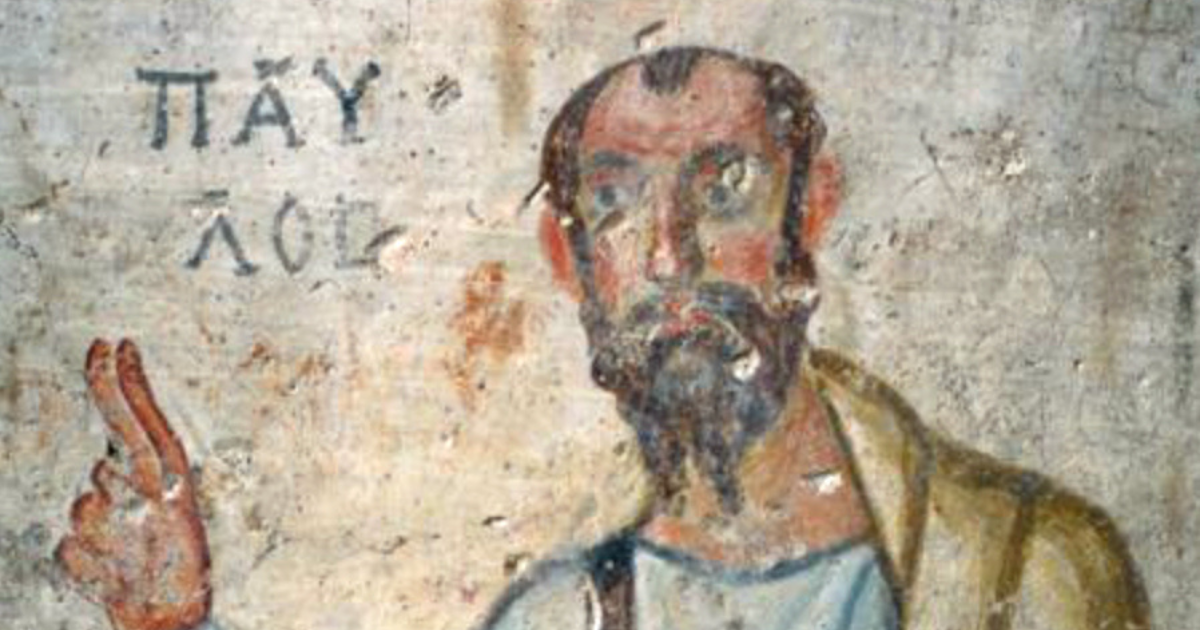
Why He Still Matters
Saint Paul defies easy categorization. He is claimed by Catholics and Protestants alike, by mystics and activists, by theologians and ordinary believers. The breadth of his influence is almost impossible to overstate.
But beneath the centuries of interpretation, his core witness is straightforward.
He was found. He went. He didn’t stop.
He teaches us:
- That no past is too dark for God to redeem — Paul never minimized what he had done, but he never let it be the last word either
- That grace is received, not earned — and that understanding this changes how you live, not how little you try
- That Christian community is worth fighting for, even when it’s messy — most of his letters exist because churches were struggling, and he wrote anyway
- That suffering is not evidence that God has abandoned you
- That the Gospel is for everyone — Paul’s radical conviction that Gentiles were fully included, without becoming Jews first, was the decision that changed the shape of Christianity forever
His life also challenges the idea that great faith comes from having it together. Paul was haunted by his past, physically battered, constantly opposed, and often lonely. He was also, by his own account, the recipient of mystical experiences he could barely describe. He contained multitudes. He was, in other words, a person — and he is a saint.
Want to Imitate Saint Paul?
- Read one of his shorter letters all the way through in one sitting — Philippians or Galatians are good starting points; they’re short enough to read in twenty minutes and personal enough to feel immediate
- Sit with Romans 8 — one of the most sustained theological arguments in the New Testament, and one of the most beautiful
- Ask for Paul’s intercession when you’re tempted to let your past define you — he has a particular understanding of that struggle
- Consider what calling you’ve been putting off because you don’t feel qualified — Paul had no obvious qualifications either
- Reflect on what grace has looked like in your own life — the moments when you were found rather than when you performed
FAQ: Saint Paul
Q: Who was Saint Paul?
A: Saint Paul was a first-century Jewish Christian missionary, theologian, and writer whose letters form a substantial portion of the New Testament.
Born Saul of Tarsus, he began as a persecutor of early Christians before a dramatic conversion experience on the road to Damascus transformed him into one of the most influential figures in Christian history.
Q: When was Saint Paul born?
A: Saint Paul was born around 5 AD in Tarsus, a city in what is now southern Turkey.
He was also a Roman citizen by birth, which gave him legal protections and privileges he would later use strategically during his missionary journeys.
Q: When did Saint Paul die?
A: Saint Paul was martyred in Rome around 67 AD during the reign of Emperor Nero.
Because he was a Roman citizen, he was beheaded rather than crucified — a form of execution reserved for citizens. Today, the Church venerates him as a martyr and one of Christianity’s greatest saints.
Q: What did Saint Paul write?
A: Saint Paul authored at least thirteen of the twenty-seven books of the New Testament.
These include:
- Romans
- First and Second Corinthians
- Galatians
- Ephesians
- Philippians
- Colossians
- First and Second Thessalonians
- First and Second Timothy
- Titus
- Philemon
Some scholars debate the authorship of a few letters, but Paul’s theology and influence are unmistakable throughout the New Testament.
Q: What is Saint Paul the patron saint of?
A: Saint Paul is the patron saint of:
- missionaries
- theologians
- evangelists
- writers
- tentmakers
He is also often invoked by Gentile Christians and by those who have experienced powerful conversions or returns to the faith.
Q: What is the feast day of Saint Paul?
A: The principal feast day of Saint Paul is June 29, celebrated as the Solemnity of Saints Peter and Paul.
The Church also celebrates the Feast of the Conversion of Saint Paul on January 25, commemorating his encounter with Christ on the road to Damascus.
Q: What are some interesting facts about Saint Paul?
A: A few facts about Saint Paul often surprise people:
- Paul never met Jesus during His earthly ministry, yet encountered the risen Christ directly.
- He wrote many of his letters while traveling, imprisoned or facing persecution.
- He was fluent in Greek, Hebrew and Aramaic.
- He supported himself financially through tentmaking rather than depending entirely on the communities he served.
- “Saul” and “Paul” were likely both names he already had — Paul being his Roman name, especially fitting for his mission to the Gentiles.
Q: What was Saint Paul’s relationship with the other apostles?
A: Paul’s relationship with the other apostles was sometimes complicated, but deeply important.
In his letters, Paul describes publicly confronting Peter in Antioch over how Gentile Christians were being treated. At the same time, Paul also traveled to Jerusalem to ensure his mission remained in communion with the wider Church.
Paul fiercely defended the idea that his apostleship came directly from Christ — yet he also understood the importance of unity.
He was independent, bold and missionary-minded, but never completely isolated from the life of the Church.
Additional Resources
Read more of our Meet the Saints series on our blog — including the stories and lives of St. Joan of Arc, St. Anselm, St. Ignatius of Loyola, and St. Peter.
More from the blog:




 Give
Give
