
If you’ve ever felt like your purpose wasn’t really about you, St. John the Baptist is your saint.
He is one of the most important figures in all of Christianity. Jesus called him the greatest man born of woman. Entire crowds traveled into the wilderness just to hear him preach. Kings feared him. Sinners sought him out. And yet his entire mission could be summarized in a single sentence:
“Prepare the way of the Lord.”
John spent his life pointing away from himself and toward someone else.
In a world obsessed with building platforms, growing influence, and becoming known, St. John the Baptist reminds us that the deepest purpose of our lives may simply be helping others encounter Christ.
Quick Biography: St. John the Baptist
St. John the Baptist (c. 5 BC–AD 30) was the son of Zechariah and Elizabeth and a relative of Jesus. His birth was miraculous, occurring after his elderly parents had long believed themselves unable to have children.
Even before his birth, John’s life was connected to Jesus. When the pregnant Mary visited Elizabeth, John leaped in his mother’s womb at the presence of Christ.
As an adult, John withdrew into the wilderness, living a life of prayer, fasting and radical simplicity. Clothed in camel’s hair and sustained by locusts and wild honey, he preached repentance and called people to prepare for the coming Messiah.
Thousands came to hear him.
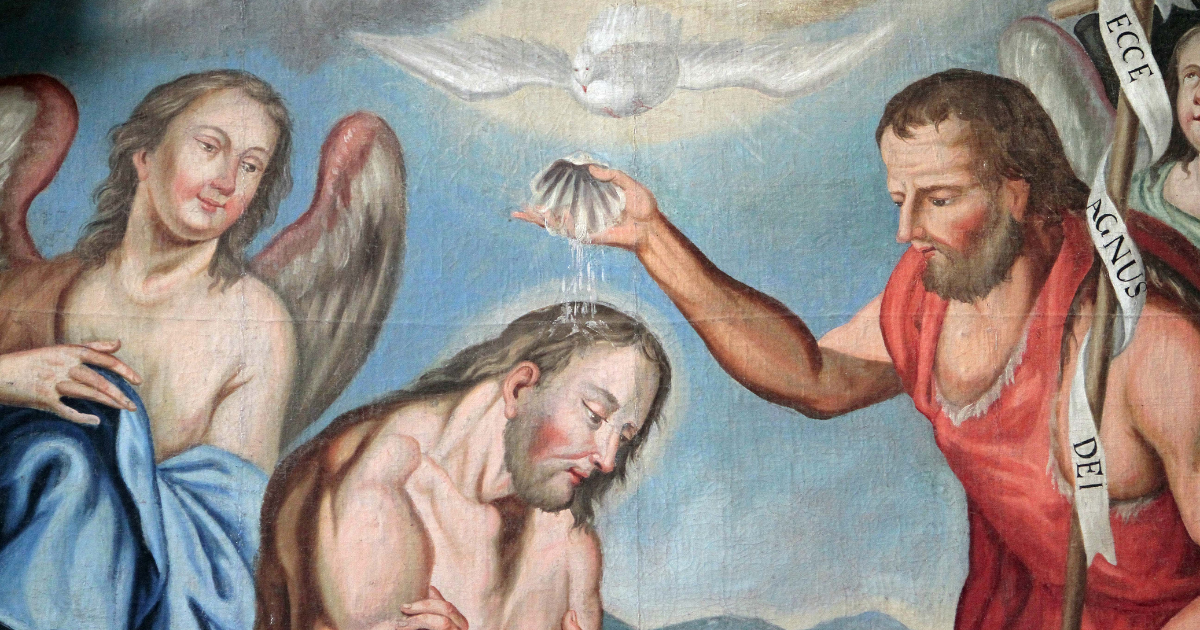
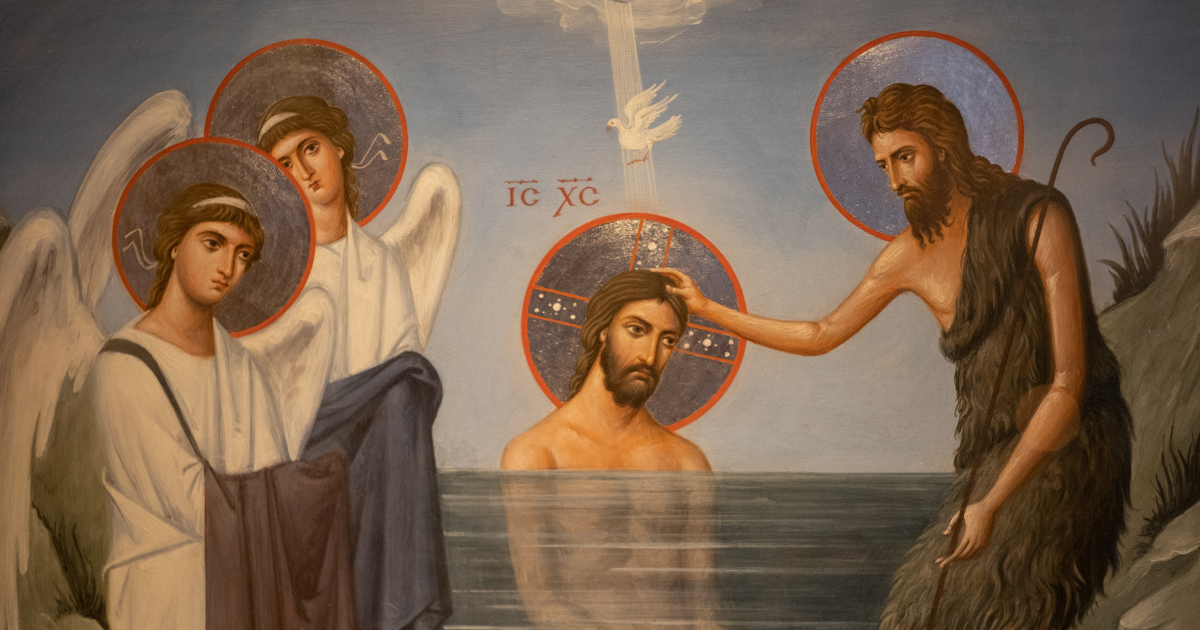
John baptized people in the Jordan River as a sign of conversion and renewal. It was there that he famously baptized Jesus, witnessing the Holy Spirit descend like a dove and hearing the Father’s voice proclaim Jesus as His beloved Son.
John’s ministry eventually brought him into conflict with King Herod Antipas, whose unlawful marriage John publicly condemned. For this, he was imprisoned and ultimately beheaded.
He died as he had lived — bearing witness to the truth.
Feast Day: June 24 (Nativity of St. John the Baptist), August 29 (Martyrdom of St. John the Baptist)
Patronage: Converts, baptisms, preachers, spiritual directors, monks, Jordan, Puerto Rico
Symbols: Lamb, baptismal shell, reed cross, camel-hair garment, river, severed head
Legacy: The forerunner of Christ, the final prophet before Jesus, and one of the most important saints in salvation history
Who Was John the Baptist?
John’s story begins before he was even born.
While serving in the Temple, his father, Zechariah, received an astonishing visit from the angel Gabriel, who announced that he and his wife Elizabeth would have a son. When Zechariah doubted the message, he was struck mute and remained unable to speak until the child’s birth.
When John finally arrived, everything unfolded exactly as Gabriel had promised. Those around him immediately sensed that God had a special purpose for this child, asking one another, “What, then, will this child be?” The answer would take years to fully unfold.
As John grew older, he disappeared into the wilderness. Scripture tells us little about those hidden years, but when he reemerges, he is unlike anyone else in Israel. Rather than preaching in cities, seeking influence or building a following, John stands in the desert with a simple but urgent message:
“Repent, for the kingdom of heaven is at hand.”
And people listen.
Crowds stream into the wilderness to hear him. Soldiers ask how they should live. Tax collectors seek his guidance. Even religious leaders travel miles to investigate the strange prophet drawing so much attention.
Some begin to wonder whether John himself might be the Messiah.
His answer is immediate and unwavering: no.
John knows exactly who he is—and just as importantly, who he is not.
The Baptism of Jesus
The defining moment of John’s life came when Jesus arrived at the Jordan River.
Recognizing that he stood before someone far greater than himself, John protested, “I need to be baptized by you.” Yet Jesus insisted.
As John lowered Jesus into the waters of the Jordan, one of the most significant moments in salvation history unfolded. The heavens opened, the Holy Spirit descended like a dove and the Father’s voice proclaimed:
“This is my beloved Son.”
In that moment, John’s entire mission came into focus. He had never been the destination; he was the signpost pointing others toward Christ. Every sermon he preached, every baptism he performed and every sacrifice he embraced had been preparing people for this encounter.
“He Must Increase, I Must Decrease”
Perhaps no phrase captures John’s spirituality more perfectly than these six words:
“He must increase; I must decrease.”
When Jesus began His public ministry, many of John’s own followers left to follow Christ. John did not resent this shift or view it as a loss. In fact, it was exactly what he had hoped for.
He understood something we often forget: success in God’s kingdom is not measured by how many people follow us, but by how many people are led closer to Jesus.
Despite his popularity and influence, John never confused his mission with Christ’s. He embraced the role God had given him, fulfilled it wholeheartedly and then stepped aside when the time came.
Courage Until the End
John’s faithfulness eventually cost him his life.
King Herod Antipas had entered into an unlawful marriage with Herodias, his brother’s wife, and John publicly condemned the relationship. His willingness to speak the truth made him dangerous.
Although Herod imprisoned him, he hesitated to order John’s execution because he feared the people’s reaction. Everything changed during a royal banquet, when Herodias’s daughter danced before the king. In a reckless display of pride, Herod promised to grant her any request. At her mother’s urging, she asked for the head of John the Baptist.
John was executed in prison.
His death was unjust, political and tragic, yet it was also the culmination of a life spent proclaiming the truth regardless of the cost. He never compromised to preserve his comfort, softened his message to protect his reputation or abandoned his calling when it became difficult.
He remained faithful to the very end.
Why He Still Matters
John the Baptist feels surprisingly relevant today.
We live in a culture that encourages self-promotion, personal branding and constant attention. John’s entire life moved in the opposite direction. Rather than drawing people to himself, he consistently pointed them toward Christ.
His example challenges us to make room for Jesus instead of ourselves, to tell the truth even when it is unpopular, to prepare our hearts through repentance and to embrace humility rather than recognition.
Above all, John reminds us that greatness in God’s kingdom often looks very different from greatness in the world’s eyes. His life was neither comfortable nor glamorous, but through his faithfulness he helped prepare the way for the Savior and changed history forever.
Want to Imitate St. John the Baptist?
Spend time examining your conscience and going to Confession regularly.
Pray with the phrase: “He must increase; I must decrease.”
Practice hidden acts of service that no one else notices.
Read the Gospel accounts of John’s ministry in Matthew 3, Mark 1, Luke 3 and John 1.
Ask for John’s intercession when you need courage to speak the truth or humility to point attention away from yourself and toward Christ.
FAQ: St. John the Baptist
Q: Who was St. John the Baptist?
A: St. John the Baptist was the prophet who prepared the way for Jesus Christ. He preached repentance, baptized people in the Jordan River, and ultimately baptized Jesus Himself.
Q: How was John the Baptist related to Jesus?
A: John’s mother, Elizabeth, was a relative of Mary’s, making John and Jesus relatives.
Q: Why is John called “the Baptist”?
A: He became known as John the Baptist because of his ministry of baptizing people in the Jordan River as a sign of repentance and preparation for the coming Messiah.
Q: What did John the Baptist eat?
A: The Gospels tell us that John lived in the wilderness and ate locusts and wild honey.
Q: Why was John the Baptist killed?
A: John publicly criticized King Herod Antipas for marrying his brother’s wife. As a result, he was imprisoned and later executed by beheading.
Q: What does “He must increase; I must decrease” mean?
A: The phrase expresses John’s humility and recognition that his role was to lead people to Jesus rather than draw attention to himself.
Q: Is John the Baptist the same person as John the Apostle?
A: No. John the Baptist and John the Apostle are different people. John the Baptist prepared the way for Jesus, while John the Apostle was one of Jesus’ twelve disciples and the traditional author of the Gospel of John.
Q: Why is John the Baptist so important?
A: John serves as the bridge between the Old and New Testaments. He is the final prophet preparing Israel for the arrival of the Messiah and personally identifies Jesus as the Lamb of God.
Additional Resources
Want to learn more about saints who changed history?
Check out these posts from the blog:
- Meet the Saints: Saint Joan of Arc
- Meet the Saints: St. Peter
- Meet the Saints: St. Ignatius of Loyola
- Meet the Saints: St. Anthony of Padua
More from the blog:




 Give
Give
