
If you’ve ever felt called to something bigger than you — something that made no sense on paper, something that other people didn’t understand — Joan of Arc is your saint.
A teenage peasant girl who led armies, defied bishops, and died at nineteen still holds a singular place in the history of the Church and the world.
Her story isn’t just remarkable for what she did. It’s remarkable for why she did it — and what she believed with absolute certainty was asking her to.
Quick Biography: Saint Joan of Arc
St. Joan of Arc (c. 1412–1431) was born Jehanne d’Arc in Domrémy, a small village in northeastern France. She grew up in a modest farming family, in a country torn apart by the Hundred Years’ War — a brutal, decades-long conflict between England and France that had left France fractured, demoralized, and largely under English control.
Joan could not read or write. She had never held a sword. By every measure of her time, she was a nobody — a peasant girl in a world where peasant girls did not lead armies.
But beginning around age thirteen, Joan began hearing voices she identified as St. Michael the Archangel, St. Catherine of Alexandria, and St. Margaret of Antioch. Their message was specific and staggering: she was to drive the English from France and escort the uncrowned French prince, Charles VII, to his rightful coronation at Reims.
She was not given a vision. She was given a mission.
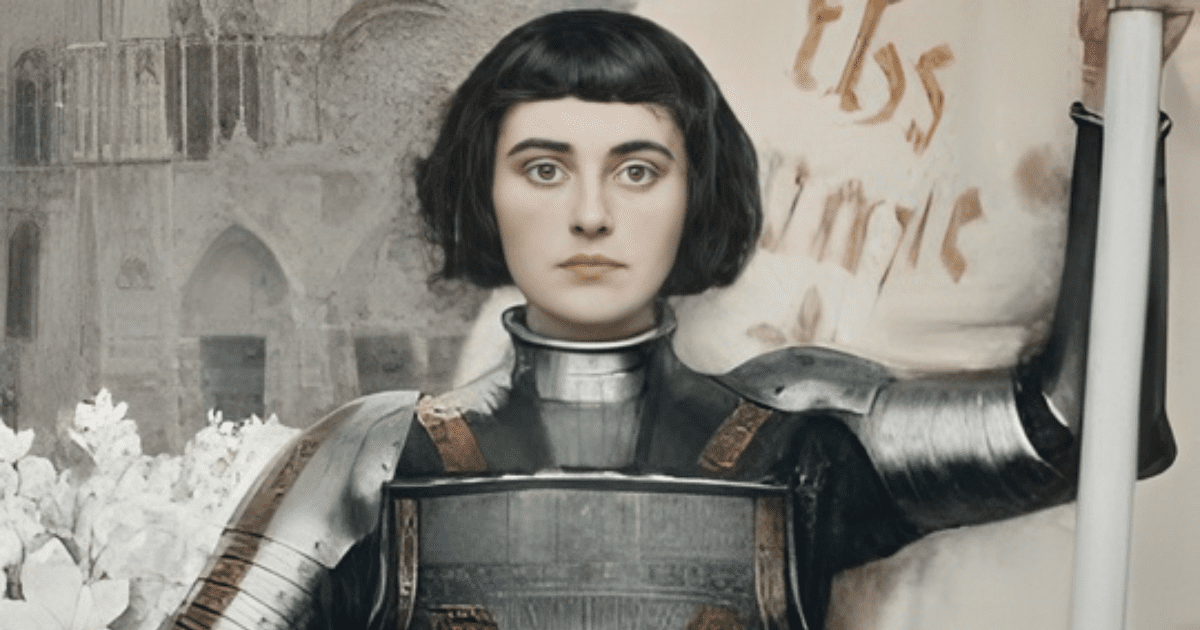
After years of persistence, Joan managed to secure an audience with Charles VII — convincing him of her divine mandate by reportedly revealing a secret known only to him. Against all military logic, he granted her armor, a banner, and an army. Within months, she had lifted the siege of Orléans — a victory military historians still puzzle over — and led Charles to his coronation.
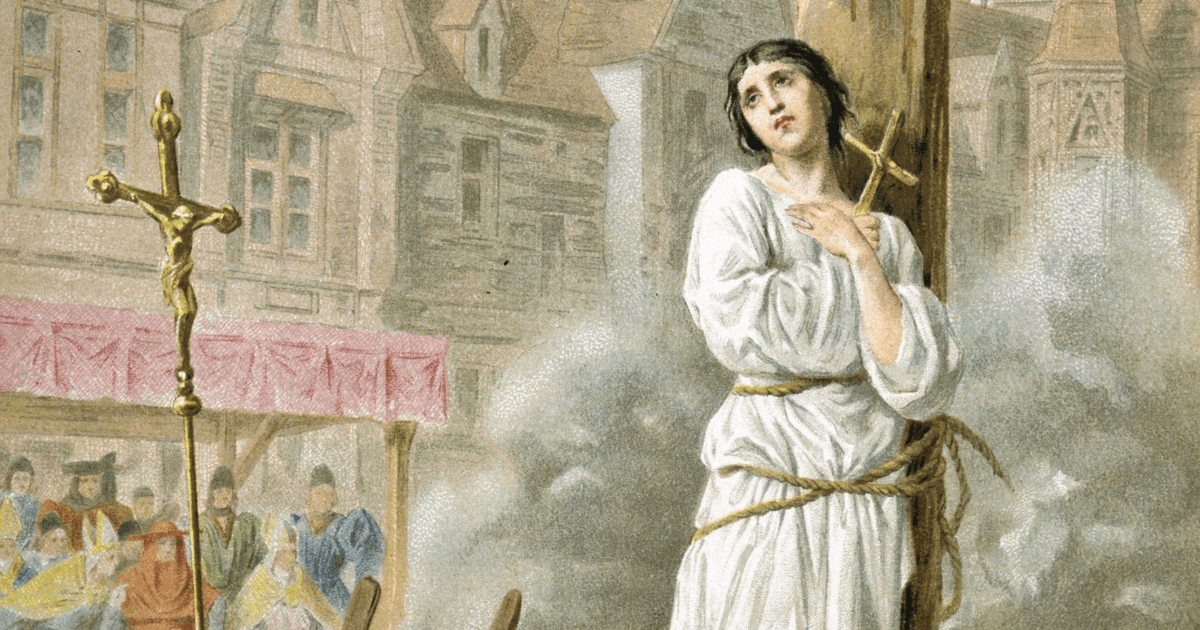
Joan was captured by Burgundian forces in 1430, sold to the English, and subjected to a politically motivated ecclesiastical trial. Found guilty of heresy, she was burned at the stake in Rouen on May 30, 1431. She was nineteen years old.
Twenty-five years later, a retrial declared her innocent on every count. She was beatified in 1909 and canonized in 1920.
Feast Day: May 30
Patronage: France, soldiers, prisoners, people ridiculed for their piety, women in the military
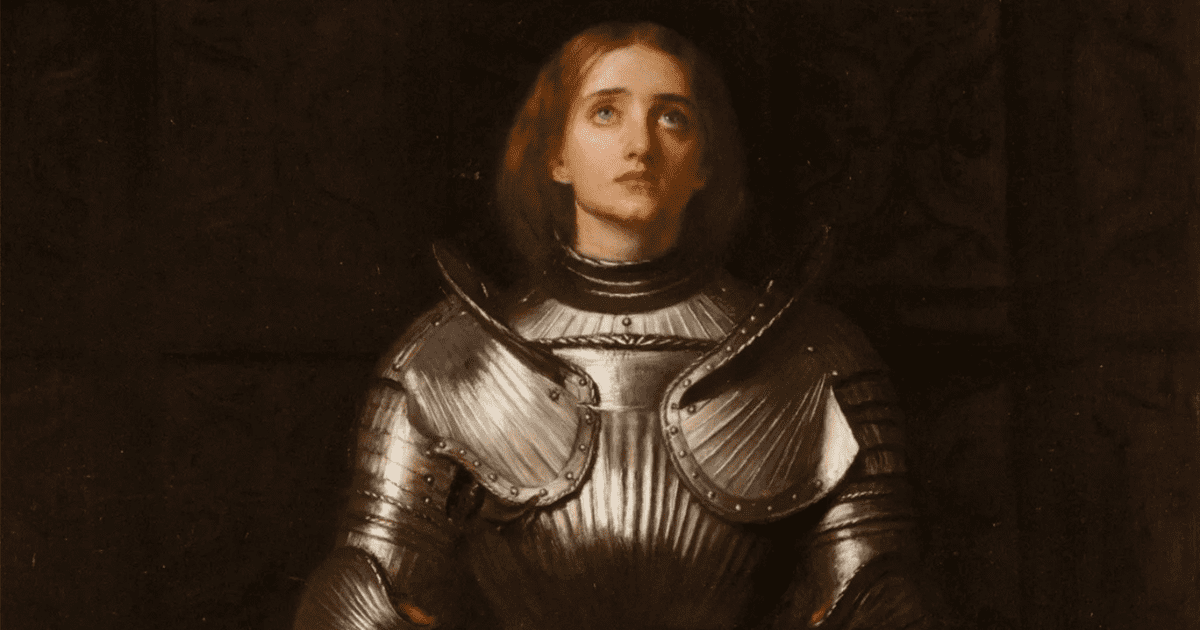
Symbols: Armor, banner bearing the name of Jesus, sword, flames
Legacy: Patron saint of France; one of the most recognizable figures in Christian history; a model of courage, obedience to conscience, and faithfulness under fire
Who Was Joan of Arc?
Joan was around thirteen when the voices started. They were Saint Michael, Saint Catherine, and Saint Margaret — and at first, they just told her to pray, go to church, and live well. Normal enough. But slowly, over the next few years, the message got bigger and harder to ignore: go to the Dauphin, drive out the English, and see that France’s rightful king was crowned.
She kept it to herself for years. Not even her priest knew. She went to Mass, helped her family with cooking and spinning and looking after the animals, and carried this growing sense of calling quietly — which, if you think about it, takes a particular kind of courage all on its own.
By the time she was sixteen, France was in serious trouble. The English controlled huge parts of the country, the would-be king Charles seemed stuck and powerless, and the important city of Orléans was close to falling. Joan felt she couldn’t wait any longer. She traveled to the nearest military garrison and told the captain — a man named Robert de Baudricourt — that she needed an escort to see the Dauphin. He thought she was ridiculous and sent her home. She came back months later, calm and certain as ever, and this time something about her convinced him. He let her through.
The journey to the royal court was eleven days on horseback, through enemy territory, dressed in men’s clothing for safety. When she finally arrived and was brought before Charles, he tried to test her by hiding himself among his courtiers. She walked straight to him. He was skeptical but intrigued enough to have her questioned by a panel of theologians for three weeks — essentially an interview to determine if she was genuine, deluded, or dangerous. She passed. She was given armor, a banner, and command of a portion of the French army.
She was seventeen years old.
Victory, Betrayal, and Why Her Story Didn’t End There
What happened at Orléans is still remarkable by any measure. This young girl with no military training or experience rode into a siege that professional soldiers had been unable to break for months. Within days of her arrival, the tide turned. The English retreated. The city was freed.
From there things moved quickly. Joan led the French through a series of further victories, and Charles was crowned King of France at Reims Cathedral — with Joan standing right there beside him, her banner in hand, her mission largely accomplished. It had been less than a year since she left home.
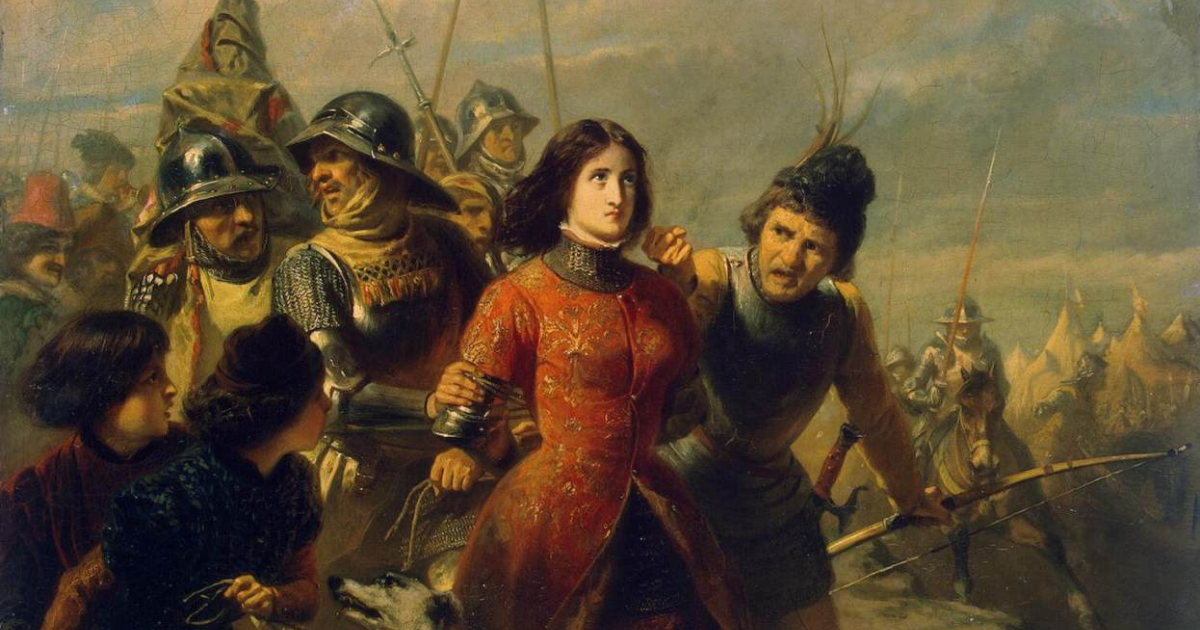
The following year, Joan was captured in battle by Burgundian forces — French allies of the English — and sold to the English for a substantial sum. What followed was one of the most unjust trials in history. The court was controlled by pro-English clergy who needed a guilty verdict. If Joan had truly been guided by God — and the victories at Orléans and beyond were very hard to explain any other way — then everything they’d been fighting for was wrong, and they simply couldn’t allow that conclusion. So they twisted the process until they got the answer they wanted, eventually convicting her on a charge related to wearing men’s clothing — the very clothing she had worn in prison to protect herself from the male guards around her. She was nineteen years old when she was burned at the stake in Rouen on May 30, 1431.
She faced it with the same quiet steadiness she had brought to everything else.
It didn’t end there, though. Twenty-five years later, her mother — who had never stopped fighting for her daughter’s name — finally saw the conviction overturned. Joan was declared a martyr. Centuries later, in 1920, she was canonized as a saint.
The thing about Joan that makes her so relatable today is that she never claimed to have it all figured out. She was a village girl who heard the voice of God, took it seriously when no one else did, and kept saying yes — one uncomfortable, unlikely step at a time. She had no power, no training, no obvious reason to be believed. And yet here we are, still talking about her nearly six hundred years later.
Joan of Arc Quotes
Joan left no written works — she couldn’t write. But the transcript of her trial preserved her words, and they remain startling in their clarity and force. A few of the most memorable Joan of Arc quotes:
“I am not afraid. I was born to do this.”
“One life is all we have and we live it as we believe in living it. But to sacrifice what you are and to live without belief, that is a fate more terrible than dying.”
“If I am not, may God put me there; if I am, may God keep me there” — her reply when asked whether she knew she was in God’s grace, a question designed to trap her theologically.
“Children say that people are hung sometimes for speaking the truth.”
These are not the words of a naive girl swept up in circumstance. They are the words of someone who has weighed the cost and chosen anyway. Her quotes endure because they speak directly to anyone navigating a call that others don’t understand.
The Voices
One of the most fascinating aspects of Joan of Arc’s story is how she engaged with her mystical experiences.
Her voices were not vague impressions. They were specific, they named themselves, and they gave her concrete instructions. And they were, ultimately, verifiable — her predictions about French military victories came true.
The Church has always approached private revelation carefully, and Joan’s case is no exception. She was subjected to weeks of theological examination before Charles VII trusted her, and again — far more aggressively — during her trial.
What strikes many scholars is how Joan handled interrogation. Without formal education in theology, she answered her examiners with a precision and composure that left them scrambling.
Her life raises questions that remain deeply relevant: How do we discern authentic spiritual promptings from wishful thinking? What does it look like to act on a calling when no one believes you? What does fidelity to conscience cost?
Joan’s answers weren’t theoretical. They were paid for in fire.
Why She Still Matters
St. Joan of Arc defies easy categorization. Beneath the centuries of interpretation, her core witness is straightforward.
She heard, she obeyed, and she didn’t stop.
She teaches us:
- To take seriously the promptings of conscience, even when they seem unreasonable
- To act with courage when circumstances seem impossible
- To hold our calling with both conviction and humility
- To remain faithful to Christ even when institutions fail us — Joan was condemned by a bishop’s court, yet died calling on Jesus
- That God works through the unlikely, the unqualified, and the overlooked
Her life also challenges the assumption that holiness requires education, status, or experience. Joan had none of these. She had prayer, obedience, and a willingness to do the next thing she was asked to do. That is, it turns out, enough.
Want to Imitate St. Joan of Arc?
- Spend time in quiet, receptive prayer — ask God what He’s actually calling you toward
- Examine your conscience regularly, with honesty rather than anxiety
- Act on a small call you’ve been resisting or postponing
- Ask for Joan’s intercession when facing unjust criticism, impossible odds, or a calling others don’t understand
- Read the transcript of her trial — her answers are still astonishing
FAQ: Saint Joan of Arc
Who was Joan of Arc? Joan of Arc was a fifteenth-century French peasant girl who believed she was called by God to lead the French army against English occupation during the Hundred Years’ War. She succeeded militarily, was later captured and executed, and was declared a saint by the Catholic Church in 1920.
When was Joan of Arc born? Joan of Arc was born around January 6, 1412, in Domrémy, a village in the Lorraine region of northeastern France. The exact date is not recorded, but January 6 — the feast of Epiphany — is the traditionally cited date.
When did Joan of Arc die? Joan of Arc died on May 30, 1431 — which is why the Church celebrates her feast day on May 30 each year.
How did Joan of Arc die? Joan of Arc was burned at the stake in the marketplace of Rouen, France, after being convicted of heresy by a church tribunal sympathetic to the English. She was approximately nineteen years old. A retrial in 1456 overturned every charge against her.
Why was Joan of Arc killed? Joan of Arc was killed primarily for political reasons. The English and their Burgundian allies needed to discredit her — and by extension, the French king she had crowned — so they pursued a charge of heresy through a sympathetic church court. The trial was widely recognized even at the time as unjust. The Church’s own retrial posthumously confirmed this.
What is Saint Joan of Arc the patron saint of? She is the patron saint of France, soldiers, prisoners, and those who are mocked or ridiculed for their faith.
What are some famous Joan of Arc quotes? Among the most well-known: “I am not afraid. I was born to do this.” Her trial transcript preserves many of her most striking words — sharp, theologically precise, and often quietly fearless.
Is there a Joan of Arc movie I can watch with my friends and/or family? Several films have been made about her life. Notable adaptations include The Passion of Joan of Arc (1928, Carl Theodor Dreyer) — widely considered one of the greatest films ever made — Joan of Arc (1948) with Ingrid Bergman, and The Messenger: The Story of Joan of Arc (1999) with Milla Jovovich. Each takes a different angle on her story, from mystical to psychological to epic.
What are some key Joan of Arc facts? A few that often surprise people: she was illiterate but could reportedly identify forged letters; she was wounded in battle multiple times and returned to fight each time; she accurately predicted several military outcomes before they happened; and her trial transcript — which survives in full — is one of the most detailed records of any medieval trial in existence.
Additional Resources
Read more of our Meet the Saints series on our blog — including the stories and lives of St. Ignatius of Loyola, St. Peter, and St. Anthony of Padua.
More from the blog:




 Give
Give
