
In a small field in Portugal, in the middle of a world war, heaven broke through.
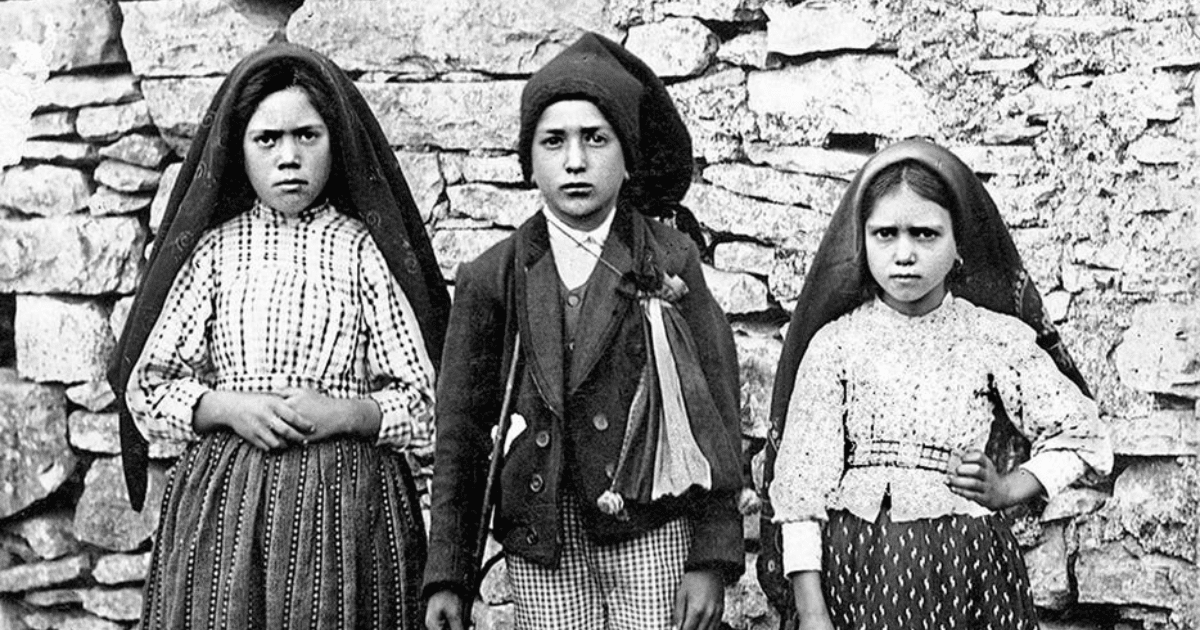
Three shepherd children — Lúcia, Francisco, and Jacinta — were tending their flock on an ordinary Tuesday morning in May 1917 when a woman appeared above a small oak tree, more brilliant than the sun, dressed in white and holding a rosary. She told them to come back on the thirteenth of each month. They did. And every time, she came too.
Over six apparitions spanning six months, Our Lady of Fatima delivered one of the most urgent and remarkable messages in the history of the Church. She warned. She wept. She promised. And on October 13, 1917, in front of a crowd of nearly 70,000 people — many of whom had come specifically to mock the children — she kept her word and gave the world a miracle it has never been able to fully explain.
Our Lady of Fatima is a reminder that God doesn’t wait for the world to be ready before He speaks. He chooses the small, the simple, and the hidden — and asks them to carry something much bigger than themselves.
(Psst – if you are looking for a great explainer on the miracles of Fatima, check out this post!)
What is “Our Lady of Fatima”?
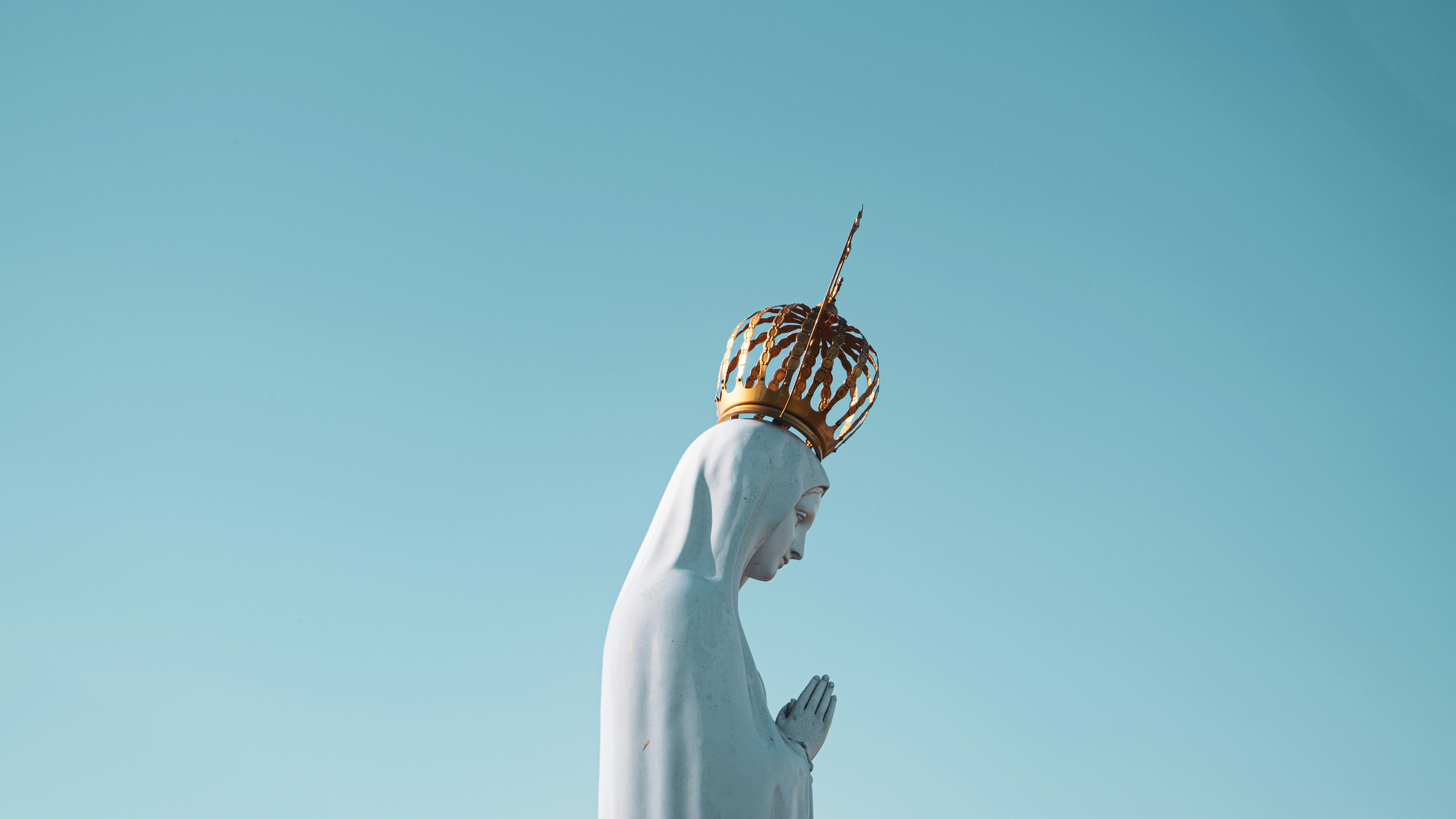
Our Lady of Fatima is a title given to the Virgin Mary following her apparitions to three shepherd children in Fátima, Portugal, in 1917. She identified herself as the Lady of the Rosary, and appeared to the children once a month over six months.
She promised that God would grant peace to the entire world if her requests for prayer, reparation, and consecration were heard and obeyed.
At the heart of her message were three requests she returned to again and again: pray the Rosary daily, make sacrifices for sinners, and consecrate Russia to her Immaculate Heart. Simple requests — but ones she treated as urgent.
The Church formally approved the apparitions as worthy of belief in 1930. Two of the three children, Francisco and Jacinta, were canonized as saints by Pope Francis in 2017 — the youngest non-martyrs ever to be canonized. Lúcia became a Carmelite nun and lived until 2005, spending her long life writing about and reflecting on what she had seen.
A Brief History of the Apparitions
It actually started before Mary appeared. Beginning in the spring of 1916, the three children reported three apparitions of an Angel, who prepared them for what was to come.
Then on May 13, 1917, everything changed. The Blessed Virgin Mary appeared to the three children — Francisco, Jacinta, and Lúcia, ages ten, nine, and seven — above a small holm oak tree as they were playing in a field called Cova da Iria. She was radiant, calm, and direct. She asked them to return each month, to pray the Rosary, and to make sacrifices for sinners.
They returned. Each time, crowds grew larger as word spread — and so did the opposition. On August 13, between 10,000 and 20,000 people gathered at the Cova da Iria to witness the apparition — but the children were not there. The local administrator had imprisoned them and threatened them to get them to reveal the secrets and confess they had been lying. The children refused. Mary appeared to them later that month, elsewhere.
Through it all, the children never changed their story.
Then came October 13 — the date Mary had promised a miracle so that all would believe. Despite three days of torrential rain, nearly 70,000 people journeyed through heavy mud to the site. Then, suddenly, the clouds parted. The sun appeared like a disk of white fire — and began to spin, throwing off brilliant colors in every direction, before appearing to plunge toward the earth. Witnesses — including skeptics and journalists — reported the same thing. It has never been scientifically explained.\
The Three Secrets of Fatima
During the July apparition, Our Lady entrusted the children with three secrets — visions they were instructed to keep private. They did, even under serious pressure and threat.
The first secret was a vision of hell — souls lost to sin, suffering without end. It was not given to frighten, but to motivate. Our Lady’s urgent plea was for prayer and sacrifice to save souls, with particular emphasis on the Rosary and devotion to her Immaculate Heart.
The second secret was a prophecy. It is interpreted as pointing toward the end of World War I, the start of World War II, and a request to consecrate Russia to her Immaculate Heart — with a warning that if this was not done, Russia would spread its errors throughout the world.
The third secret was the most mysterious — kept from the public until the year 2000. It has been interpreted as a vision of the 20th-century persecution of Christians, culminating in the assassination attempt on Pope John Paul II in 1981 — which happened, strikingly, on May 13, the anniversary of the first apparition. John Paul II himself believed Our Lady of Fatima saved his life that day.
Understanding the Symbolism
The image and story of Our Lady of Fatima is rich with meaning:
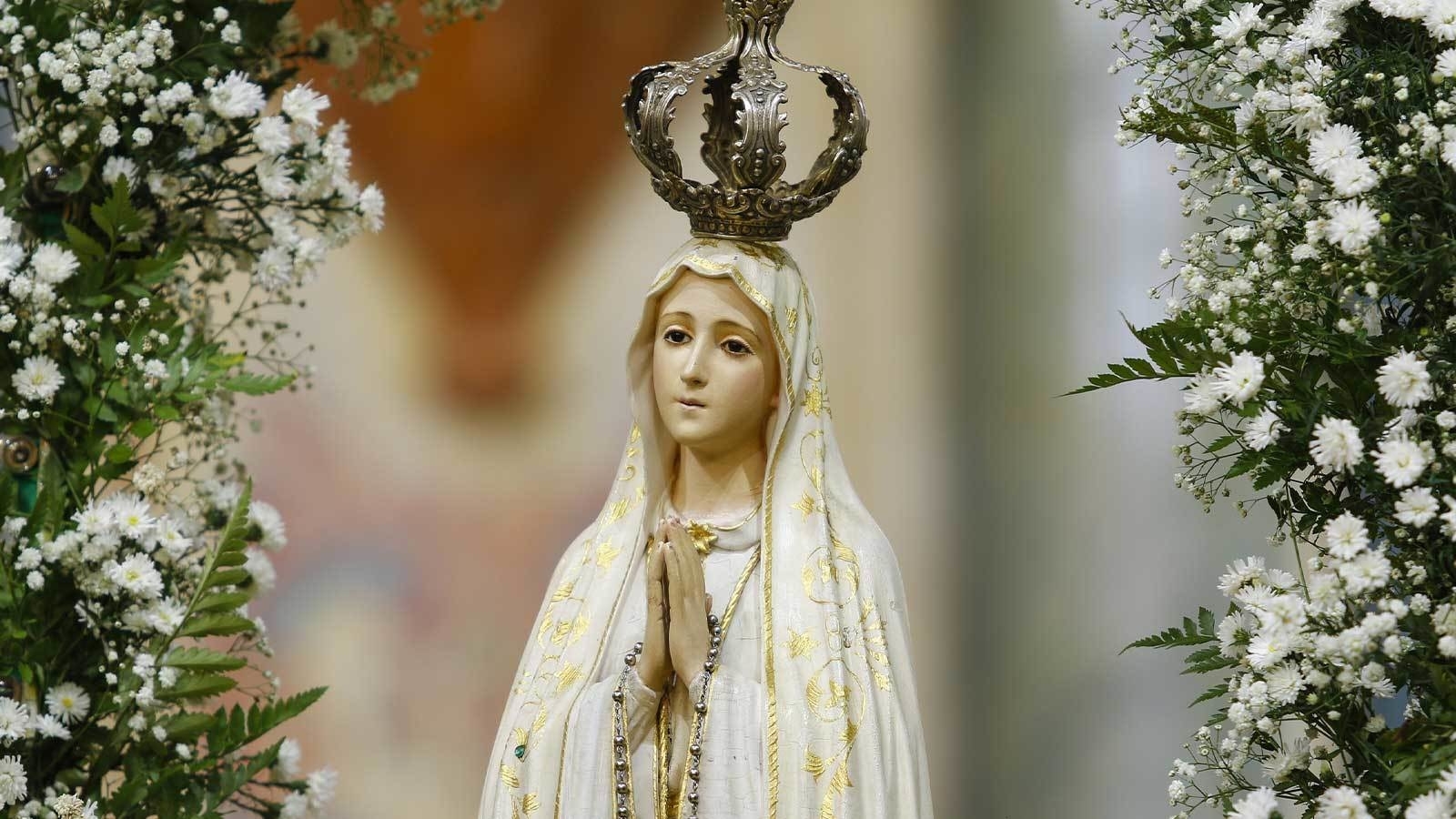
White Garment: Purity and holiness — a reflection of Mary’s own immaculate nature.
The Rosary: Her most repeated request. She held it in every apparition and asked the children — and the world — to pray it daily.
The Immaculate Heart: A symbol of Mary’s love for her Son and her sorrow for sinners. She asked for devotion to it as a path to peace.
The Three Children: Small, poor, uneducated — exactly the kind of messengers God tends to choose.
The Miracle of the Sun: A public sign given not just to the faithful, but to an entire crowd — including those who came to disbelieve.
What Does This Devotion Mean for Us Today?
A Call to Prayer — Real, Daily Prayer: Our Lady didn’t ask for elaborate devotions. She asked for the Rosary, every day. It’s a quiet, accessible prayer — and she treated it like the world depended on it.
Hope in Dark Times: Fatima happened in the middle of a world war, to children living in poverty, in a country largely indifferent to their message. If Mary could speak hope into that moment, she can speak into ours.
The Urgency of Intercession: Mary wept at Fatima for souls. She asked the children to suffer and sacrifice for sinners they would never meet. That kind of intercessory love — praying for others at cost to yourself — is at the heart of what it means to follow Christ.
Mary Always Points to Jesus: Every message at Fatima leads back to her Son. The Rosary meditates on his life. The Immaculate Heart exists to lead us to his Sacred Heart. Devotion to Our Lady of Fatima is, at its core, a deeper entry into relationship with Christ.
Practical Ways to Bring This Devotion into Your Life
- Pray the Rosary daily — even just one decade is a start. Follow Mary’s most repeated request.
- Learn the Fatima Prayer — “O my Jesus, forgive us our sins, save us from the fires of hell, and lead all souls to heaven, especially those most in need of Thy mercy” — and add it to your Rosary.
- Observe the First Saturdays devotion — five consecutive first Saturdays of confession, communion, Rosary, and fifteen minutes of meditation on the mysteries, offered in reparation to Mary’s Immaculate Heart.
- Read about the children of Fatima — especially Lúcia’s memoirs, which are deeply personal and moving accounts of what she saw and heard.
- Celebrate the Feast — May 13 is the Feast of Our Lady of Fatima. Pray for peace, for sinners, and for the Church on that day.
FAQ
Q: Who is Our Lady of Fatima? A: She is the Blessed Virgin Mary, under the title given after her six apparitions to three shepherd children in Fátima, Portugal, in 1917.
Q: Who were the children at Fatima? A: Lúcia dos Santos, age ten, and her younger cousins Francisco and Jacinta Marto, ages nine and seven. Francisco and Jacinta died young and were canonized as saints in 2017. Lúcia became a Carmelite nun and lived until 2005.
Q: What did Our Lady ask for at Fatima? A: She asked for daily prayer of the Rosary, sacrifice and reparation for sinners, and the consecration of Russia to her Immaculate Heart — all as paths to peace for the world.
Q: What are the Three Secrets of Fatima? A: A vision of hell; a prophecy about World War II and a request to consecrate Russia; and a third secret, kept private until 2000, widely understood as a vision of the persecution of the Church and the assassination attempt on Pope John Paul II.
Q: What was the Miracle of the Sun? A: On October 13, 1917, nearly 70,000 people witnessed the sun spin, change colors, and appear to fall toward the earth before returning to its place. It was reported by believers and skeptics alike and has never been scientifically explained.
Q: When is the Feast of Our Lady of Fatima? A: May 13 — the anniversary of the first apparition in 1917.
Q: Is Fatima approved by the Church? A: Yes. The local bishop declared the apparitions worthy of belief in 1930, and Fatima has since been visited and endorsed by multiple popes.
Q: How can I pray to Our Lady of Fatima? A: Pray the Rosary, add the Fatima Prayer after each decade, and ask her intercession with this simple prayer: “Our Lady of Fatima, pray for us and for the whole world.”
Additional Resources
Here’s a great resource on Our Lady of Fatima, along with a playlist of Marian songs to celebrate and honor her feast day on May 13th: https://www.ocp.org/en-us/blog/entry/our-lady-of-fatima-centennial
Then, go in depth with this guide on the details of the apparitions: https://fatima.org/circumstances-and-dialogue-of-the-1917-apparitions/
Learn even more about Our Lady of Fatima in this post: https://focus.org/posts/what-happened-at-fatima-our-lady-of-fatima-explained/
Want to learn more about Mary and her apparitions? Explore these posts on the blog:
Meet Our Lady: Our Lady of Lourdes
Meet Our Lady: Our Lady of Guadalupe
Meet Our Lady: Our Lady of Good Success
Meet Our Lady: Our Lady of Perpetual Help
Looking for more? Visit the Meet the Saints series to read about holy men and women who lived Mary’s “yes” in every age.
Check out the FOCUS YouTube channel for reflections and videos on Mary and the saints—like the one below:
Mary as the Mother of God? | Paul J. Kim | #seek24 – YouTube



 Give
Give
