
If you’ve ever wrestled with big questions about God — not just what you believe, but why — Anselm is your saint.
A monk, philosopher, and archbishop who refused to separate faith from reason, St. Anselm spent his life asking one central question: Can what we believe about God actually make sense?
His answer wasn’t abstract. It was deeply personal, intellectually rigorous, and rooted in a conviction that still challenges us today: faith is not the end of thinking — it’s the beginning of it.
Quick Biography: St. Anselm
St. Anselm (c. 1033–1109) was born in Aosta, in what is now northern Italy. As a young man, he struggled with both family conflict and a restless desire for meaning. After leaving home, he eventually entered the Benedictine abbey at Bec in Normandy, where he would spend most of his life as a monk, teacher, and later abbot.
Anselm became known for his extraordinary intellect and clarity of thought. He wrote theological works that would shape the Church for centuries — including the argument for the existence of God most associated with St. Anselm, now known as the “ontological argument” — and his reflections on why Christ’s death was necessary for our salvation.
Later in life, he was appointed Archbishop of Canterbury in England, where he found himself in constant conflict with the king over the freedom of the Church. He was exiled twice for refusing to compromise on matters of conscience and ecclesial authority.
Anselm died on April 21, 1109. He was canonized in 1494 and later declared a Doctor of the Church.
- Feast Day: April 21
- When was St. Anselm born? Around 1033, in Aosta (present-day Italy)
- What is St. Anselm patron saint of? Theologians and philosophers
- Symbols: Books, crozier, monastic habit
- Legacy: Doctor of the Church; pioneer of scholastic theology; a model of faith seeking understanding
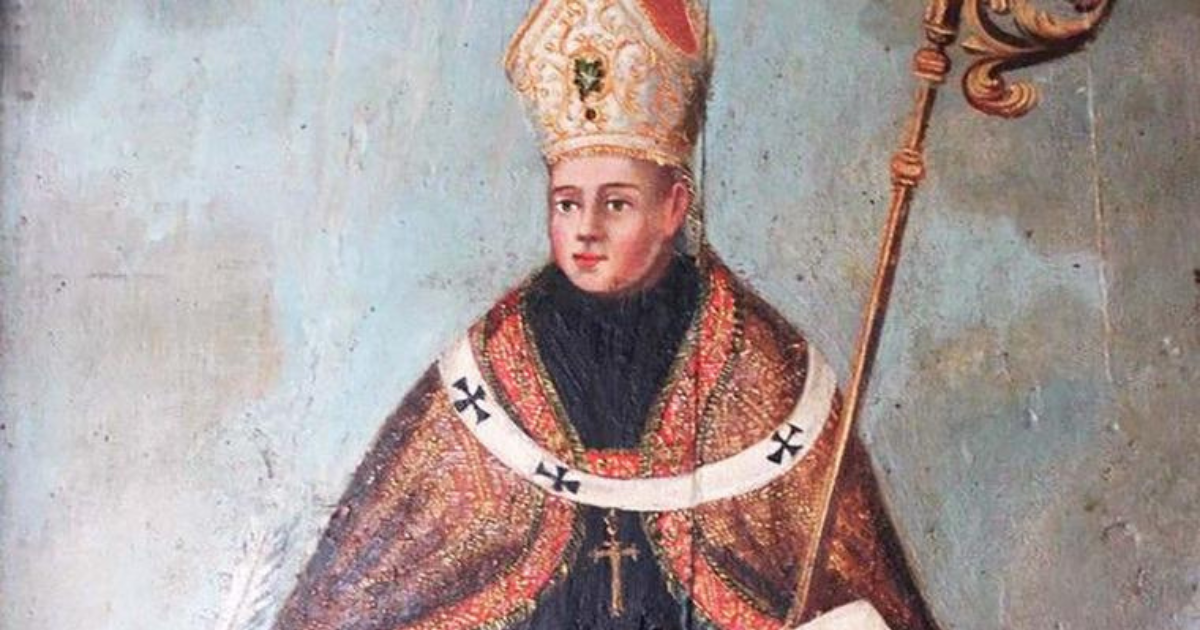
From Wanderer to Scholar: Anselm’s Early Life
Anselm’s path to greatness was anything but straight.
He grew up in Aosta with a father who had big political plans for him and zero interest in letting his son become a monk. Anselm tried anyway — and was turned away. So he did what a lot of young men do when life doesn’t go as planned: he wandered. After leaving home at twenty-three, he spent three years in apparently aimless travelling through Burgundy and France before finally landing in Normandy — and finding the place that would change everything.
In 1057, Anselm entered the monastery at Bec because he wanted to study under its renowned prior, Lanfranc — a brilliant fellow Italian who had already made Bec one of the great intellectual centers of the age. Anselm thrived. He was elected prior within a few years, and fifteen years later was unanimously chosen abbot. It was during these years at Bec that he wrote the Monologion, the Proslogion, and the early work that would become Cur Deus Homo — the books that would secure his place in history.
He was also, by all accounts, a remarkable teacher and human being — known for his patience, gentleness, and the way he made people feel genuinely seen and heard.
The Archbishop Who Wouldn’t Back Down
Then came the job nobody — including Anselm — wanted him to have.
When his mentor Lanfranc died, the Archbishop of Canterbury position fell vacant. King William II had been deliberately leaving it empty so he could pocket the income from its lands. In March 1093, while Anselm was in England on other business, William II named him Archbishop. The clergy cheered. Anselm resisted, citing age and poor health. The monks of Bec refused to release him. None of it worked — the clerics forced the crozier into his hands and bodily carried him to a nearby church amid celebration. He was 60 years old.
The central fight that would define his time as Archbishop was over who had the right to appoint bishops — the king or the pope. Anselm held firm: that was the Church’s call. The king disagreed. Anselm was given the choice of exile or total submission, and he chose exile. Twice. Once under William II, and again under his successor Henry I.
Even in exile, he didn’t slow down — writing theology, counseling the pope, and at one point helping guide the Greek Catholic bishops of southern Italy to adopt Roman Rites at the Council of Bari. Eventually a compromise was reached, and at the Synod of Westminster in 1107 the king formally renounced the right to invest bishops with the symbols of their office — a real win for the Church that became a model for similar settlements across Europe.
He also found time, amid all of this, to do something quietly remarkable: Anselm obtained from the national council at Westminster a resolution prohibiting the sale of human beings — a bold stand against the slave trade that was well ahead of his time.
Anselm spent his final two years in peace at Canterbury, and died on April 21, 1109.
St. Anselm’s Conception of God: How Did He Describe God?
At the heart of Anselm’s philosophy is a deceptively simple but profound idea: his definition of God as “that than which nothing greater can be conceived.” This phrase — St. Anselm’s conception of God — became the foundation of the ontological argument and one of the most discussed ideas in the history of philosophy.
How did St. Anselm describe God? Not through mystical language alone, but through logic. He reasoned that if you can conceive of a being so great that nothing greater is possible, that being must exist — because a God who exists in reality is greater than one who exists only in the mind. It’s a compact but radical argument: the very concept of God, properly understood, implies His existence.
Upon this foundation — the nature and existence of God as understood through reason — Anselm wanted Christianity to focus its intellectual energy. He believed the Church should not shy away from hard questions but engage them with both faith and rigorous thought.
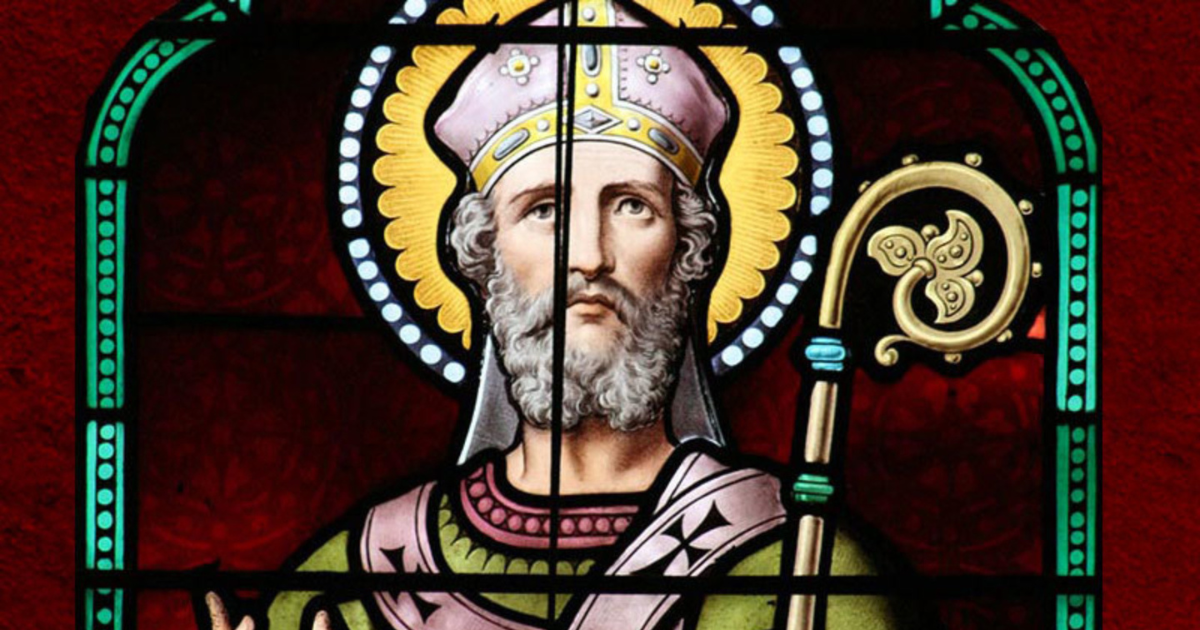
How Did St. Anselm Attempt to Prove That God Existed?
The argument for the existence of God most associated with St. Anselm is the ontological argument, first presented in his work Proslogion. Here’s how St. Anselm attempted to prove that God existed:
He began not with the physical world, but with the concept of God itself. Even a person who denies God’s existence, Anselm argued, understands what is meant by “God” — a being greater than which nothing can be conceived. But if that being existed only in the mind and not in reality, we could conceive of something even greater: the same being, but actually existing. That would be a contradiction. Therefore, God must exist in reality.
This argument — entirely logical, requiring no appeal to evidence — was groundbreaking. It has been debated, refined, and challenged by philosophers ever since, from St. Thomas Aquinas to Immanuel Kant to contemporary thinkers. Its staying power is a testament to Anselm’s brilliance.
St. Anselm and Mary: A Theologian’s Devotion
May is Mary’s month — and it turns out, St. Anselm has a great deal to say to us during it.
While Anselm is best known for his philosophical arguments, he was also a man of deep Marian devotion. He wrote three prayers specifically addressed to the Virgin Mary, each designed to move the soul through a different spiritual disposition: from heaviness and awareness of sin, to freedom from fear and anxiety, to a culmination of love for both Christ and Mary together. These weren’t formal theological treatises — they were personal, heartfelt prayers, and some scholars consider them among the most original writings of his entire career.
Theologically, Anselm described Mary with a phrase that mirrors his famous definition of God: he wrote that “it was fitting that the Virgin should shine with a purity so great that nothing greater under God can be imagined.” In other words, Mary occupies the highest place in creation that any creature can — immediately below God Himself.
He also gave her a striking cosmic title. In one of his most beautiful passages, Anselm calls God “the Father of the created world” and Mary “the mother of the re-created world” — reasoning that just as nothing could exist without God’s Son, nothing could be redeemed without Mary’s Son.
This May, Anselm invites us to honor Mary the way he did: not by setting her apart from Christ, but by seeing in her the fullest flowering of what grace can accomplish in a human life.
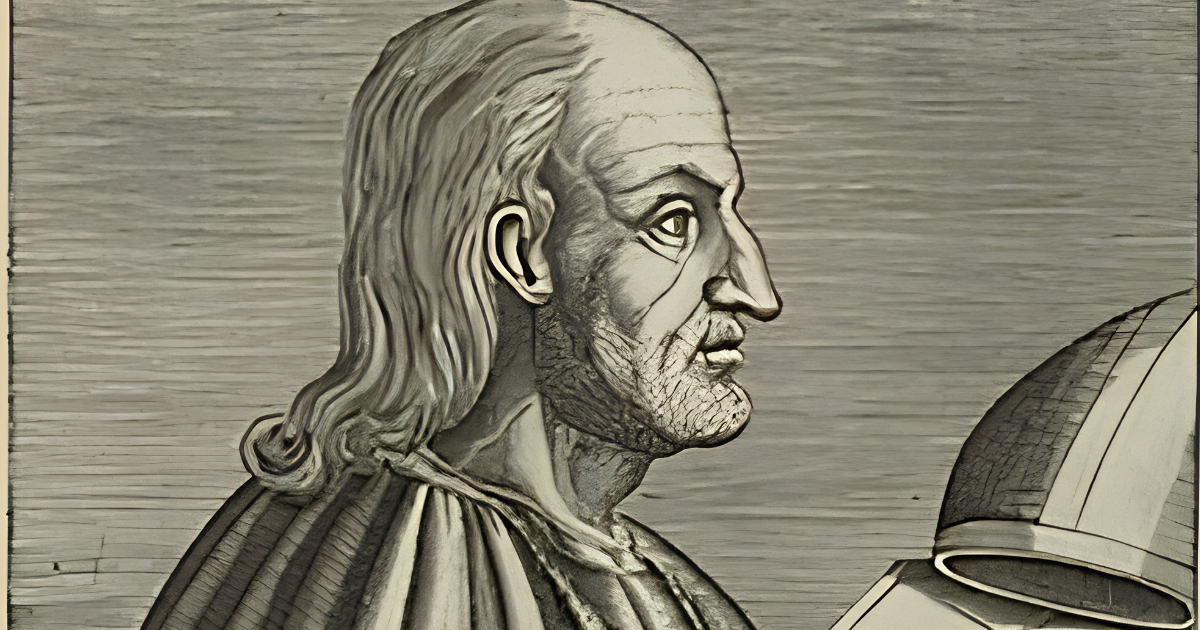
St. Anselm Quotes That Still Resonate
Anselm’s writings are dense, but at their core, they are deeply human — full of longing, clarity, and a desire to know God more fully.
A few of his most well-known lines:
“For I do not seek to understand in order to believe, but I believe in order to understand.”
“God is that than which nothing greater can be conceived.”
“Lord, I am not trying to make my way to your height, for my understanding is in no way equal to that, but I do desire to understand your truth a little.”
“Teach me to seek you, and reveal yourself to me as I seek.”
These aren’t abstract philosophical statements. They’re prayers — the kind that come from someone who knows both the limits of reason and its importance.
Faith and Reason: Not Opposites
One of Anselm’s greatest contributions is his refusal to separate faith and reason.
In a world where people often assume that belief requires turning off the mind, Anselm offers a different vision: faith is not irrational, reason is not opposed to belief, and the two, when properly ordered, deepen one another.
His work laid the foundation for centuries of Catholic intellectual tradition — influencing thinkers like St. Thomas Aquinas and shaping how the Church understands the relationship between theology and philosophy.
But what’s most striking is that Anselm didn’t pursue reason for its own sake. He pursued it because he loved God — and wanted to understand Him more fully.
Why He Still Matters
St. Anselm speaks directly to a modern tension: Can you be both intellectually serious and deeply faithful?
His answer is yes — but not by lowering the bar on either.
He teaches us that questions are not a threat to faith but a path into it; that seeking understanding is itself an act of devotion; that truth is coherent and worth pursuing with both heart and mind; that fidelity sometimes requires standing firm, even against authority; and that belief should be lived, examined, and deepened over time.
In a culture that often divides “thinking” people and “believing” people, Anselm quietly refuses the divide.
What to Read by St. Anselm — and About Him
If you want to go deeper, here are the best places to start:
By St. Anselm:
- Proslogion — His most famous work, containing the ontological argument and some of his most moving prayers. Short, readable, and rewarding.
- Cur Deus Homo (“Why God Became Man”) — His theological reflection on the necessity of the Incarnation and atonement.
About St. Anselm:
- Anselm of Canterbury: The Major Works (Oxford World’s Classics) — An accessible collection for general readers.
- The Life of St. Anselm by Eadmer — A biography written by Anselm’s own secretary and companion, rich in personal detail.
Want to Imitate St. Anselm?
- Bring your real questions to prayer — don’t filter them out
- Spend time reading Scripture or theology slowly, seeking to understand, not just finish
- Let your faith shape how you think — and your thinking deepen your faith
- Ask Anselm’s intercession when wrestling with doubt or intellectual tension
- Practice intellectual humility — pursuing truth without assuming you already have it
FAQ: St. Anselm
Q: Who was St. Anselm?
A: St. Anselm was an 11th-century Benedictine monk, theologian, and Archbishop of Canterbury known for his contributions to philosophy and theology, especially his idea of “faith seeking understanding.”
Q: When was St. Anselm born?
A: He was born around 1033 in Aosta, in present-day Italy.
Q: When did St. Anselm live?
A: St. Anselm lived from approximately 1033 to 1109 — spanning the Norman Conquest of England and a pivotal era in the medieval Church.
Q: When was St. Anselm canonized?
A: He was canonized in 1494 and later declared a Doctor of the Church by Pope Clement XI in 1720.
Q: What is St. Anselm patron saint of?
A: St. Anselm is the patron saint of theologians and philosophers.
Q: What is St. Anselm known for?
A: He is best known for the ontological argument for the existence of God and for articulating the relationship between faith and reason.
Q: What argument for the existence of God is most associated with St. Anselm?
A: The ontological argument — the idea that God, defined as the greatest conceivable being, must exist in reality and not merely in the mind.
Q: How did St. Anselm describe God?
A: Anselm described God through the lens of reason: as the supreme, perfect, and necessary being — one whose non-existence would be a logical contradiction.
Q: Upon what did St. Anselm want Christianity to focus?
A: Anselm wanted Christianity to take reason seriously — to engage faith intellectually and show that belief in God is not only a matter of the heart but of the mind. He wanted the Church to embrace the harmony of faith and reason.
Q: What does “faith seeking understanding” mean?
A: It means that faith is not opposed to reason — rather, belief leads us to seek deeper understanding of what we believe.
Additional Resources
Read more of our Meet the Saints series on our blog — including the stories and lives of St. Ignatius of Loyola, St. Peter, and St. Anthony of Padua.
More from the blog:




 Give
Give
