
If you’ve ever felt like you came to something late — like everyone else had a head start and you were the backup plan — Saint Matthias is your saint.
He wasn’t one of the original Twelve. He wasn’t named in the Gospels. He watched from the edges as Jesus called others by name, built his inner circle, and set the world in motion. And then, after the Ascension, after the betrayal, after everything — his name was drawn.
His story isn’t one of dramatic calling or miraculous conversion. It’s a story about quiet faithfulness — about showing up, staying close, and being found ready when the moment came.
That turns out to be more than enough.
Quick Biography: Saint Matthias
Saint Matthias — whose name comes from the Hebrew Mattithiah, meaning “gift of God” — was one of the seventy disciples of Jesus and had been with him from his baptism by John until the Ascension. He is not named in the lists of disciples in the Synoptic Gospels, which means he followed Jesus faithfully for years without any particular recognition or title.
After the Ascension, with the Eleven gathered in Jerusalem alongside about 120 disciples, Peter stood up to propose the way to make the choice of a replacement for Judas. Peter had one criterion: that the new apostle be someone who had been a disciple from the very beginning — from the baptism by John until the Ascension.
Two men fit this description — Matthias and Joseph called Barsabbas. The apostles knew that only the Lord could know what was in the heart of each. They cast lots in order to discover God’s will, and Matthias was chosen. He was numbered among the Twelve, received the Holy Spirit at Pentecost alongside the other apostles — and then disappears entirely from the pages of Scripture.
What happened next belongs to tradition. According to various traditions, Matthias traveled north to Cappadocia, modern-day central Turkey, and then east to the Caspian Sea, modern-day Georgia. He is believed to have died a martyr by crucifixion or may have even been stoned and then beheaded. Other traditions state that he traveled south to modern-day Sudan and Ethiopia.
Feast Day: May 14
Patronage: Tailors, carpenters, those struggling with alcoholism, those with smallpox
Symbols: Axe or halberd (instruments of his martyrdom), the Gospel book, lots
Legacy: The apostle chosen to restore the Twelve; a model of hidden faithfulness, humility, and readiness
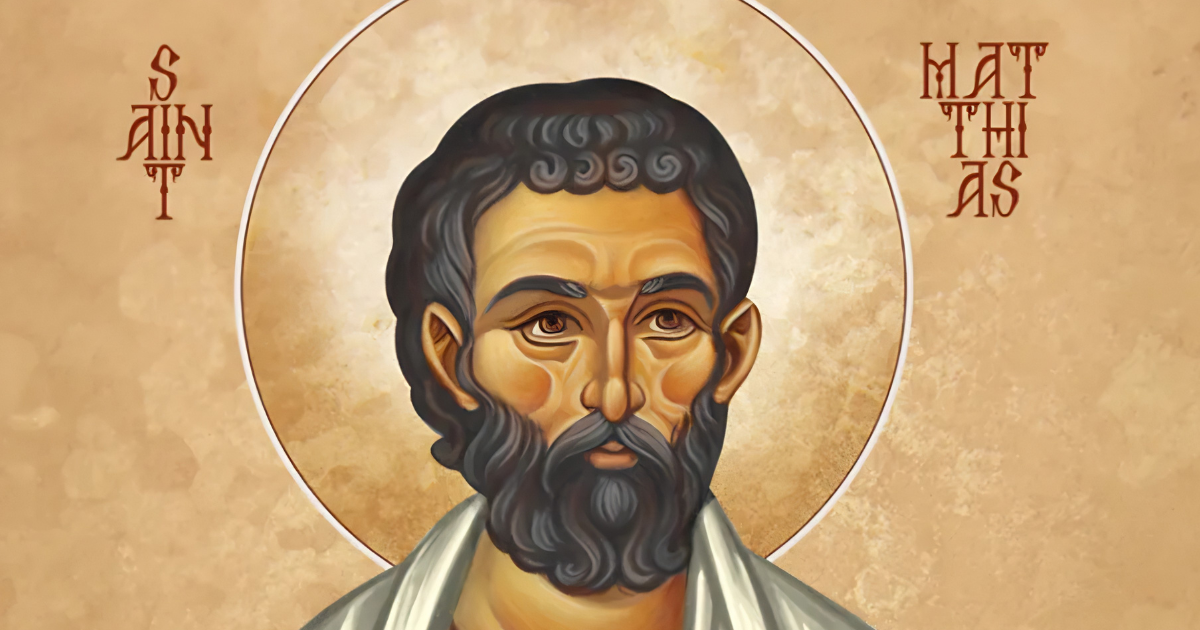
Who Was Saint Matthias?
Matthias is, in many ways, the apostle we know least about — and that is precisely what makes him so interesting.
He was there from the beginning. He most likely lived in Galilee when Jesus began his public ministry, fitting the description of one who “accompanied us the whole time the Lord Jesus came and went among us, beginning from the baptism of John until the day on which he was taken up from us” (Acts 1:21–22). He heard the Sermon on the Mount. He watched the miracles. He was present through the full arc of Jesus’ public life — and yet he was never named, never spotlighted, never singled out.
He was simply there. Faithful. Watching. Following.
And then Judas betrayed the Lord, and everything changed. With all the questions, doubts and dangers facing the early Church, the apostles chose to focus their attention on finding a twelfth apostle. Twelve was a very important number to the Chosen People — it was the number of the twelve tribes of Israel. If the new Israel was to come from the disciples of Jesus, a twelfth apostle was needed.
When the lots were cast, the name drawn was Matthias.
He was the twelfth apostle, and the group was whole again as they waited for the coming of the Holy Spirit.
What strikes many about this moment is what it required of Matthias before it happened. He had spent years following Jesus without a title, without prominence, without any guarantee that it would lead anywhere. And yet he stayed. He remained faithful in the ordinary, unseen, uncelebrated work of discipleship — and that faithfulness was exactly what qualified him for what came next.
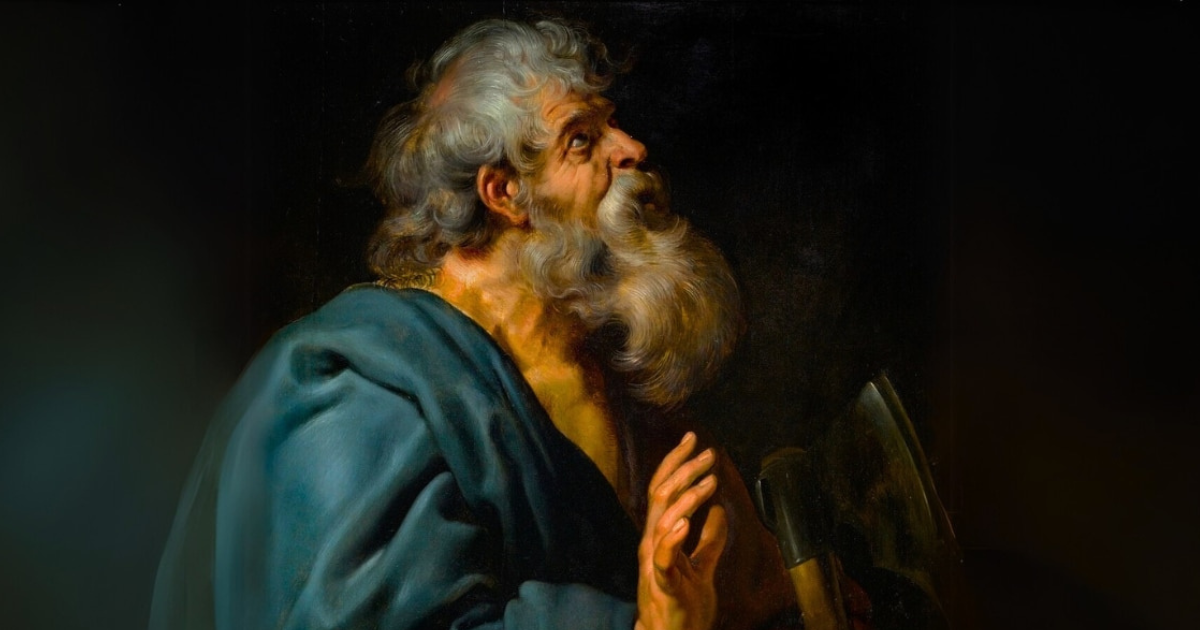
Saint Matthias Quotes
Matthias left no written Gospel and is mentioned by name only once in the New Testament. But the Church Father Saint Clement of Alexandria quotes Saint Matthias as follows:
It’s a striking quote from someone history has left largely in the shadows. It speaks of self-mastery, spiritual growth and the importance of pursuing God with both the will and the mind. In a few lines it reveals a man who understood that the interior life is where everything begins.
The nature of this saying and its encouragement to grow in self-mastery and virtue is most likely why Saint Matthias is attributed to being one of the patron saints of those struggling with alcoholism.
There is also this — from Alban Butler’s Lives of the Saints:
“Judas’s misfortune filled St. Matthias with the greater humility and fervor, lest he also should fall.”
He stepped into the place left by a betrayer and responded not with pride, but with deeper humility. That tells you a great deal about the man.
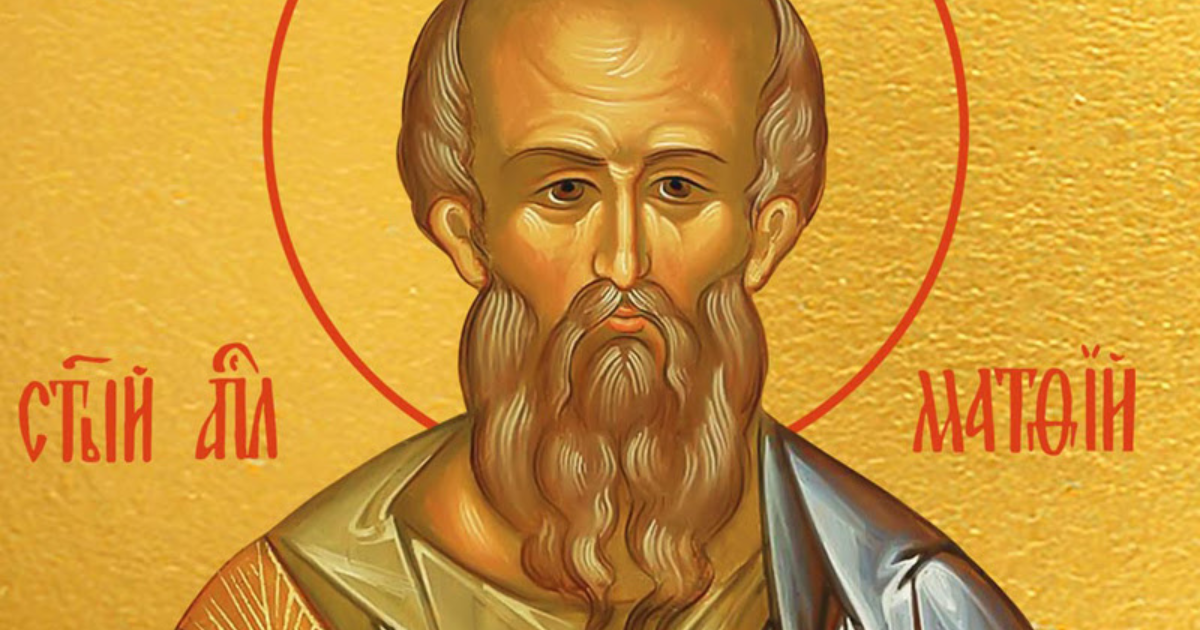
The Hidden Apostle
One of the most compelling things about Saint Matthias is precisely how little we know about him.
He followed Jesus for years without a name in the record. He was chosen by lot rather than called by name. He is mentioned once in Scripture and then never again. Even the accounts of his missionary work and martyrdom are uncertain and varied — different traditions send him to different corners of the ancient world.
And yet the Church has always honored him. His feast has been on the calendar since the eleventh century. He is numbered among the Twelve. He received the Holy Spirit at Pentecost. He preached the Gospel and, by all accounts, died for it.
There is something deeply consoling about this. Most of us will live lives that history does not record. Most of us will do our faithful, ordinary work without recognition, without a spotlight, without our names appearing in any lasting document. Most of us will simply show up — to prayer, to service, to the quiet demands of vocation — without knowing whether it amounts to anything.
Matthias shows us that it does. That God sees what history doesn’t. That the lot can fall on the one who was simply there, faithfully, all along.
Why He Still Matters
Saint Matthias speaks directly to anyone who has ever felt overlooked, underqualified, or like a replacement for someone else.
He teaches us:
- That faithfulness in hiddenness is genuine faithfulness — and God sees it
- That being chosen by God is never about being the most impressive candidate
- That our past failures don’t disqualify us — but someone else’s failure doesn’t qualify us either; it is God who chooses
- That showing up, day after day, in prayer and discipleship, is the preparation for everything else
- That the Church needs the Twelfth — needs every member, every role, every person willing to step into the gap
His life also challenges the assumption that significance requires visibility. Matthias had neither — and was still numbered among the apostles of the Lord.
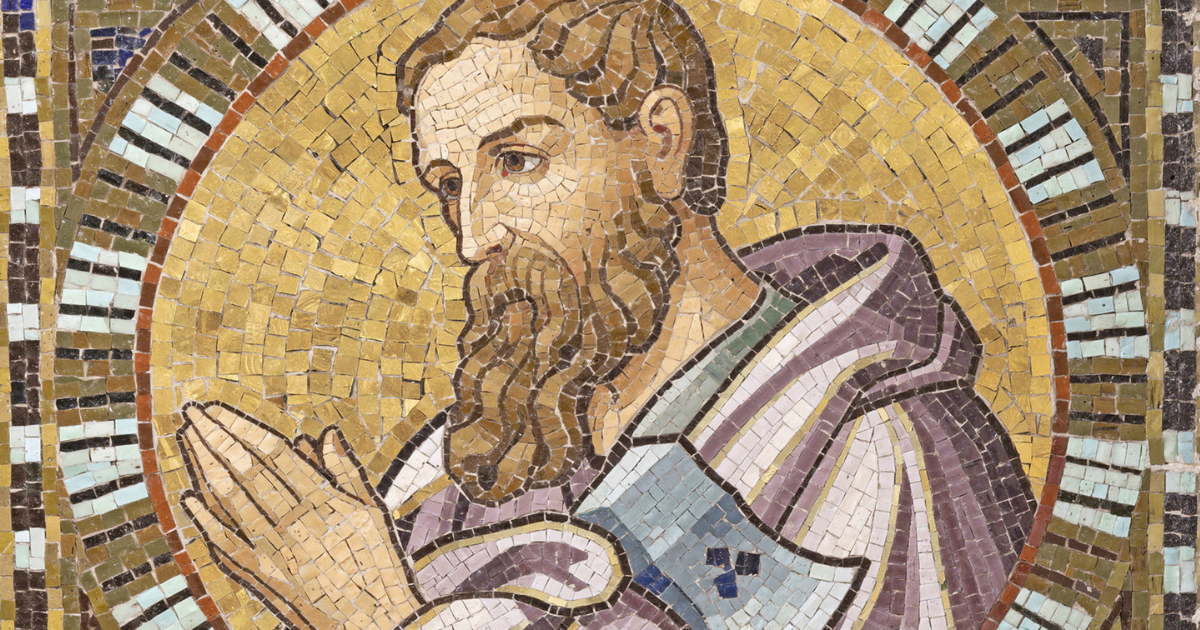
Want to Imitate Saint Matthias?
- Be faithful in the ordinary. Don’t wait for a dramatic calling. Show up consistently in prayer, in service, in the small demands of your vocation — that is where Matthias was formed.
- Practice humility about your role. Matthias stepped into a position left by a traitor and responded with deeper devotion, not pride. Ask for the grace to serve without needing recognition.
- Pray with the early Church. The prayer before the casting of lots — “Lord, you know everyone’s heart. Show us which one of these two you have chosen” (Acts 1:24) — is a beautiful model for any decision you face.
- Ask Saint Matthias’s intercession when you feel like a latecomer, a backup, or someone who doesn’t quite belong. He knows that feeling — and he became an apostle anyway.
- Read Acts 1:15–26 slowly. It’s one of the shortest and most quietly powerful passages in the New Testament.
FAQ: Saint Matthias
Q: Who was Saint Matthias?
A: Saint Matthias was the apostle chosen to replace Judas Iscariot after the Ascension of Jesus. He had followed Jesus faithfully from the time of his baptism by John and was selected by the casting of lots to restore the Twelve. He is mentioned by name only once in the New Testament.
Q: When is the feast day of Saint Matthias?
A: The feast of Saint Matthias is celebrated on May 14 in the Roman Catholic Church. It was moved to this date in 1969 so that it would fall in Eastertide — close to the Ascension — rather than in Lent, where it had previously been celebrated on February 24.
Q: What does the name Matthias mean?
A: The name Matthias is derived from the Hebrew Mattithiah, meaning “gift of God.”
Q: How was Saint Matthias chosen?
A: After Peter proposed that the apostles find a replacement for Judas, two candidates were put forward — Matthias and Joseph called Barsabbas. The community prayed and then cast lots, a traditional Hebrew practice for discerning God’s will. The lot fell on Matthias.
Q: What is Saint Matthias the patron saint of?
A: Saint Matthias is a patron saint of tailors, carpenters, those struggling with alcoholism, and those with smallpox. His patronage of those struggling with alcoholism is connected to a saying attributed to him about combating the flesh and growing in self-mastery.
Q: How did Saint Matthias die?
A: Tradition maintains that Matthias was stoned at Jerusalem and then beheaded. Other traditions suggest martyrdom by crucifixion. The accounts vary, but all agree that he died for his faith.
Q: Where did Saint Matthias preach?
A: It is generally believed that Matthias ministered in Judaea and then carried out missions to foreign places. Greek tradition states that he Christianized Cappadocia, in modern-day central Turkey, and later journeyed to the region around the Caspian Sea. Other traditions also place him in Ethiopia and Sudan.
Q: Where are the relics of Saint Matthias?
A: It is claimed that Saint Matthias’s remains were brought to Italy through Empress Helena, mother of Emperor Constantine the Great. Part of these relics were interred in the Abbey of Santa Giustina in Padua, and the remainder in the Abbey of St. Matthias in Trier, Germany.
Q: Why did the apostles need to replace Judas?
A: Twelve was a very important number to the Chosen People — it was the number of the twelve tribes of Israel. If the new Israel was to come from the disciples of Jesus, a twelfth apostle was needed. Peter also cited Psalm 109, which prophesied that another would take the office of the one who fell away.
Q: What did Saint Matthias say?
A: Saint Clement of Alexandria quotes Saint Matthias: “It behooves us to combat the flesh, and make use of it, without pampering it by unlawful gratifications. As to the soul, we must develop her power by faith and knowledge.”
Additional Resources
Read more of our Meet the Saints series on our blog — including the stories and lives of St. Ignatius of Loyola, St. Peter, and St. Anthony of Padua.
More from the blog:




 Give
Give
